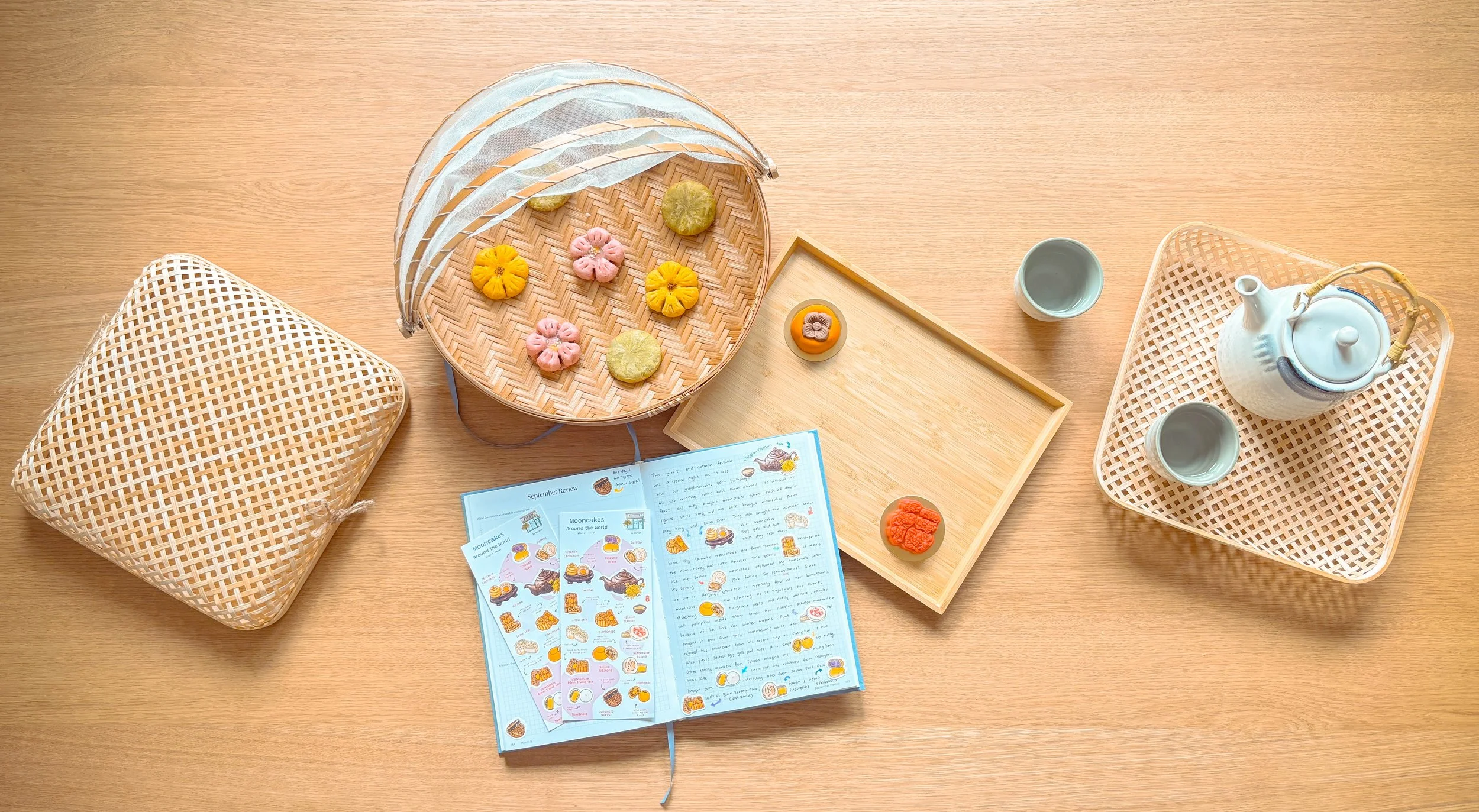
Mooncakes from Around the World
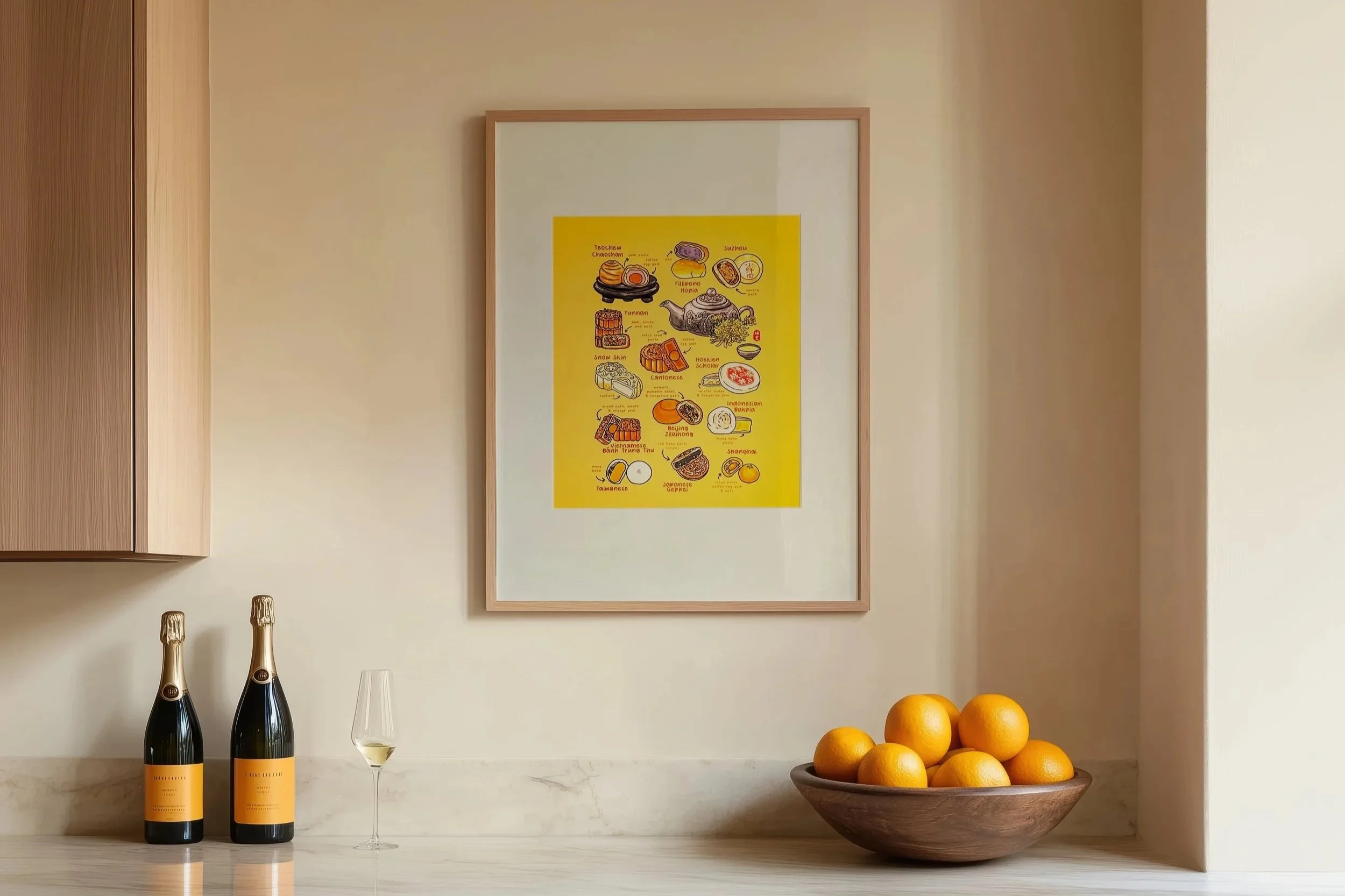
Mooncakes Around the World art print by Zhi Wen Design
Mooncakes are dense, round pastries traditionally eaten during the Mid-Autumn Festival, a major harvest celebration in the Chinese culture. Its ancient origins can be traced through agricultural and lunar roots dating back over a thousand years, as moon worship and harvest celebrations were established practices and rites with pastries are evolved over time. The one popular historical legend (which my late grandfather always recount during our family gathering for the festival), links mooncakes to the Yuan dynasty (1271–1368). Rebel groups are said to have hidden messages inside mooncake-like pastries to coordinate an uprising against Mongol rulers, using the pastries as covert communication for the rebellion that ultimately helped restore Han Chinese rule.
Beyond their rich, sweet filling and golden crust, mooncakes carry deep symbolic meaning rooted in family, unity, and gratitude. The circular form symbolizes reunion and completeness, reflecting the full moon and the gathering of family members. Classic fillings such as lotus seed paste, red bean, and salted egg yolk carry symbolic associations—lotus seeds for purity and fertility, egg yolks as representations of the moon and prosperity. Mooncake tops often feature characters for “longevity,” “harmony,” or the name of the bakery, further conveying good wishes. Therefore, mooncakes are often presented as gifts to relatives, friends, business associates, and hosts as exchanging mooncakes is a culturally important way to express respect, gratitude, and to strengthen social bonds.
The evolution of mooncake varieties has expanded throughout Asia and each region or country has its own unique design, playing with flavor and culture from their land. In this article we will explore the various mooncakes in my illustration artwork.
Teochew Chaoshan mooncakes
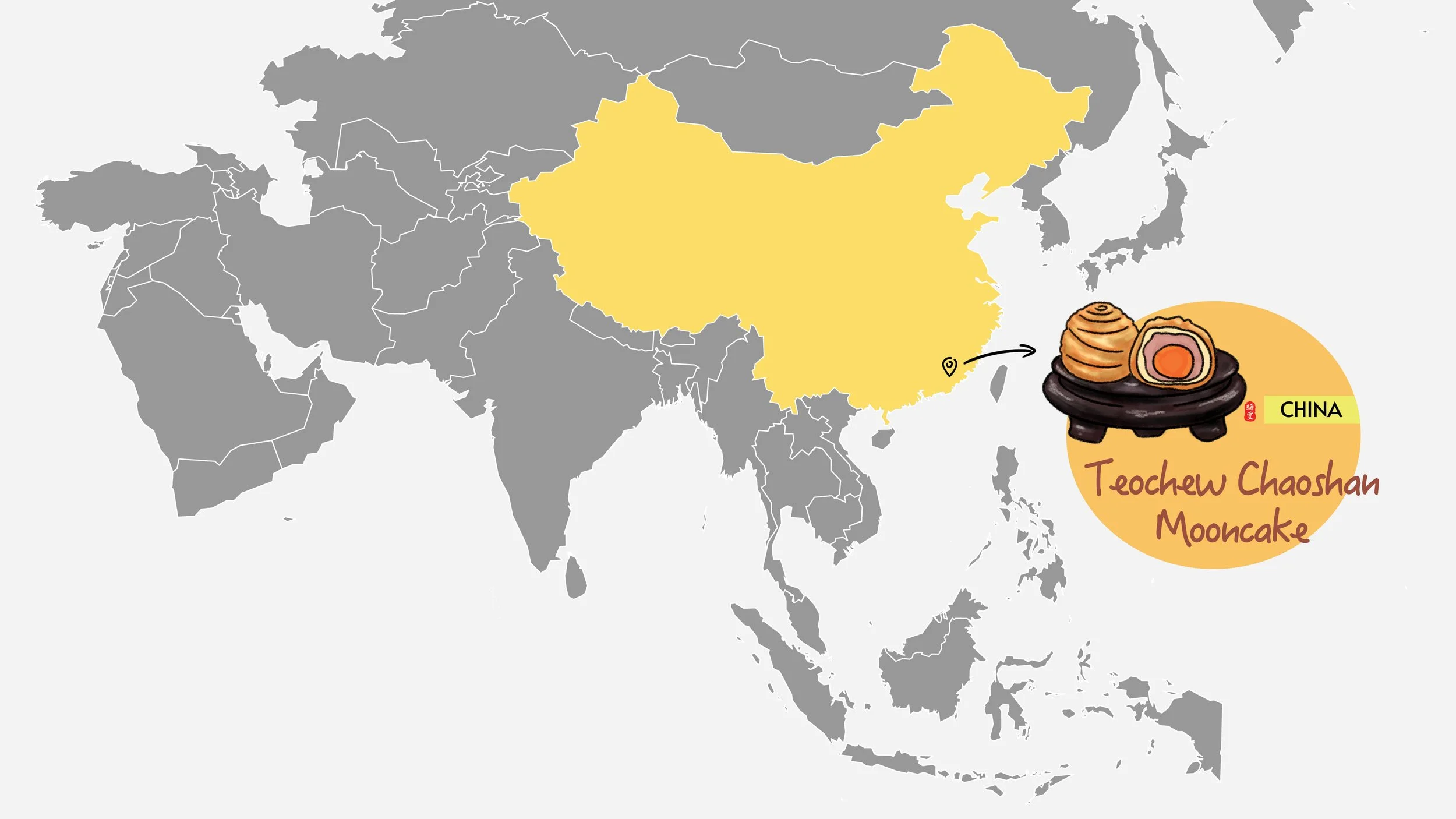
Visual Map of the Teochew Chaoshan mooncake by Zhi Wen Design
Teochew (Chaoshan) mooncakes, a delicate regional treasure from the Chaoshan area of eastern Guangdong reflects the soft-spoken elegance and culinary precision of Teochew culture. Rooted in a distinct dialect group and coastal lifestyle, these mooncakes differ from their Cantonese and Suzhou counterparts in texture, appearance, and flavor, embodying a history of refined taste and local tradition.
Over generations, Teochew bakers developed signatures like thin, flaky crusts and interior textures that lean toward moist and cohesive rather than dense or overly sweet. The crust is characteristically thin and tender, often achieved through layered pastry methods that create a slight flakiness without heaviness. The outer surface may be lightly browned, glossy, and simple in imprinting. The mooncake’s decoration tends toward modest motifs—small floral stamps, simple characters, or unadorned smooth tops—reflecting Teochew restraint and emphasis on the filling. The Teochew mooncake fillings prioritize balance, silkiness, and pronounced but measured sweetness. Common fillings include yam (taro) paste: smooth, subtly sweet, and earthy—often the most traditional Teochew preference; sweetened mung bean paste, white lotus paste, salted egg yolk, mixed nut or sweetened winter melon.
Teochew mooncakes may be less showy than other regional styles, but their quiet elegance and culinary discipline make them a prized choice for those who appreciate restrained, soulful pastries rooted in local culture.
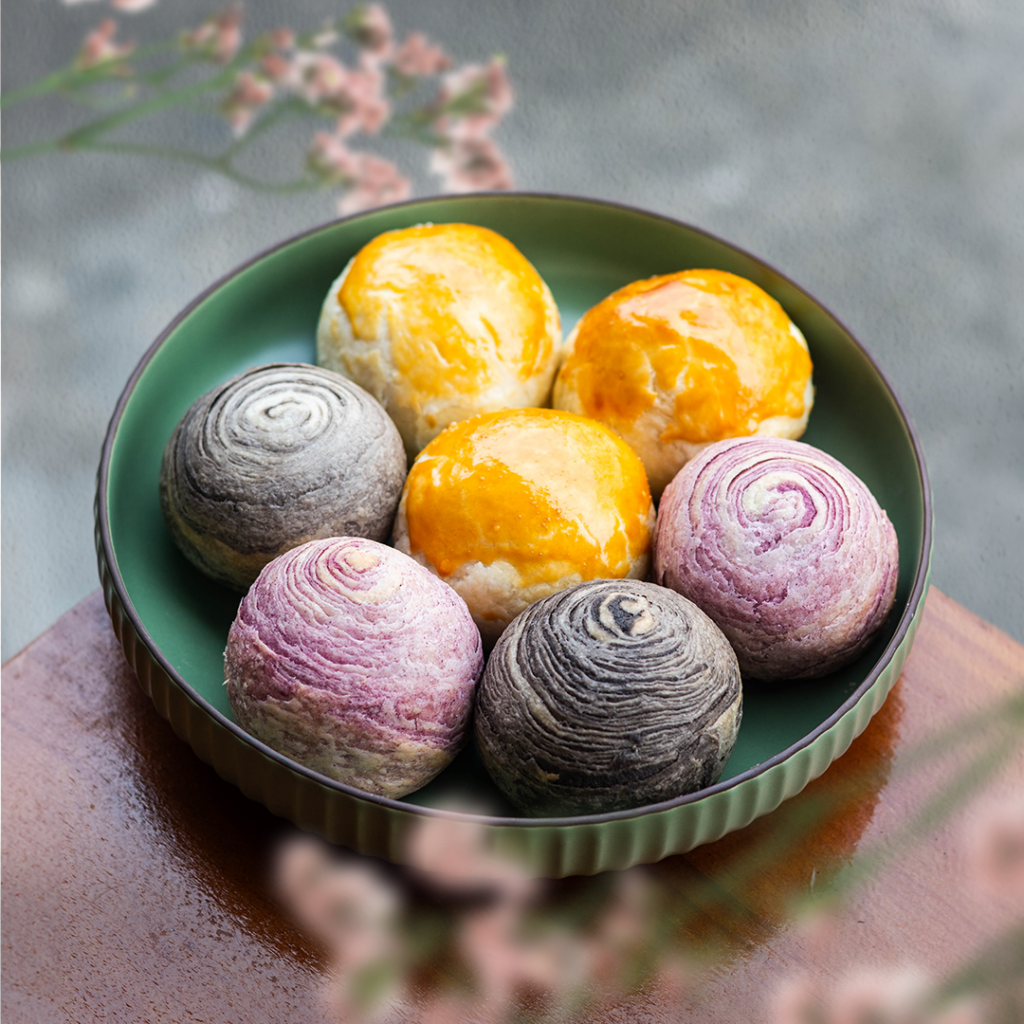
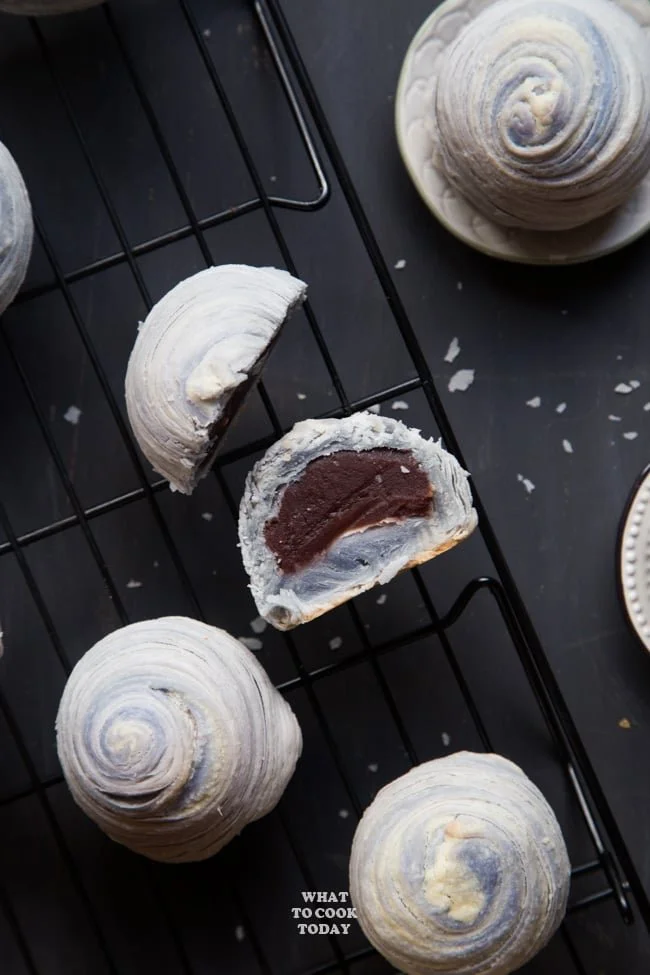
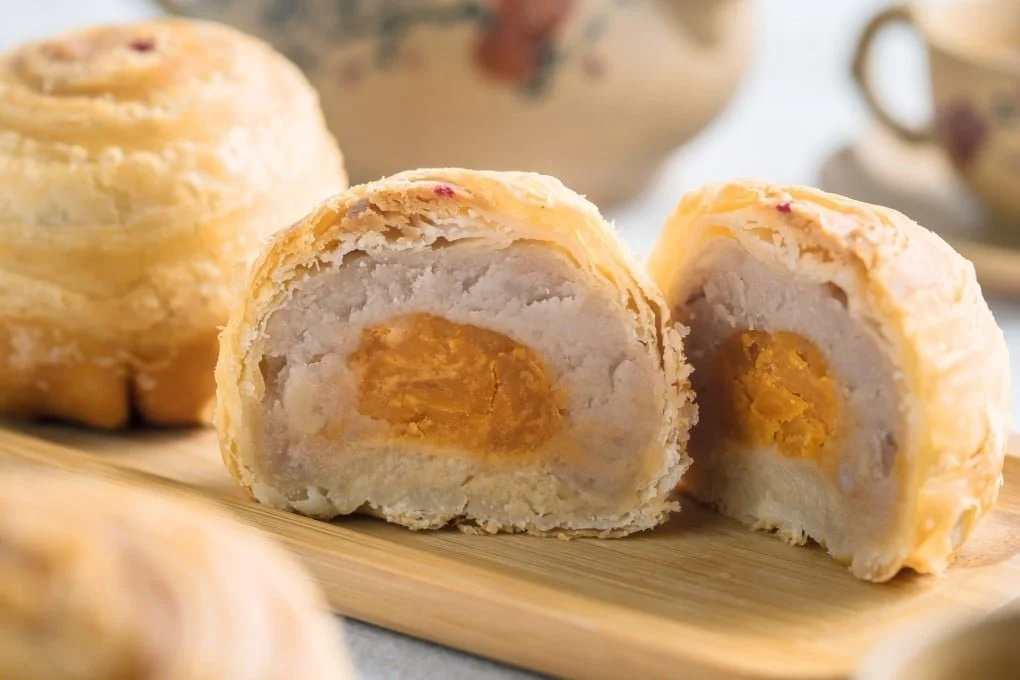
Images of the Suzhou mooncake by La Levain, South China Morning Post & What To Cook Today
Suzhou mooncakes
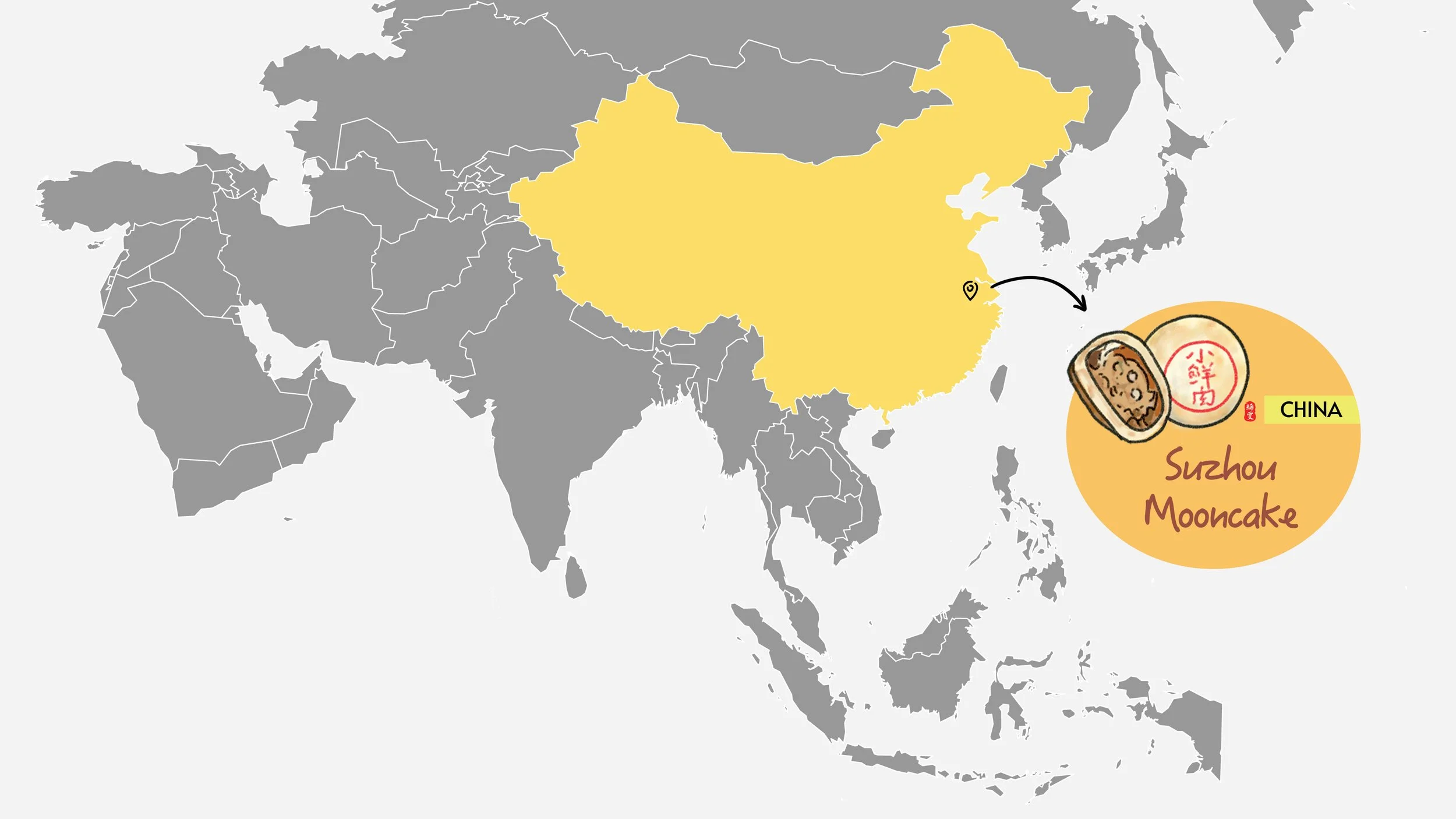
Visual Map of the Suzhou mooncake by Zhi Wen Design
Suzhou mooncakes with meaty filling are a savory, richly textured variant of the classic Mid-Autumn treat, balancing flaky pastry with a deeply seasoned interior. The crust is thin and multi-layered, often achieved through a lamination technique that yields a delicate, slightly crisp exterior that gives way to tender, buttery layers where else the filing is a harmonious blend of ground pork (or sometimes minced duck or other meats), rendered fat, and a careful mix of aromatics and seasonings—soy sauce, Shaoxing wine, five-spice powder, white pepper, and a touch of sugar—to create umami depth and subtle sweetness.
Textures play a starring role: the meat is silky rather than coarse, frequently combined with finely chopped preserved vegetables, mushrooms, or scallions to add contrasts in bite and pockets of savory brightness. Some recipes fold in a bit of gelatinized broth or fat to keep the filling moist and glossy. The overall flavor leans toward savory and mildly spiced, with lingering savory-sweet notes and a pleasingly fatty richness that pairs beautifully with tea.
Finished mooncakes often carry a light sheen and are stamped with simple, elegant molds. Served warm or at room temperature, Suzhou meaty mooncakes are a comfortingly robust alternative to sweet mooncakes—perfect for those who prefer savory complexity and layered textures in every bite.
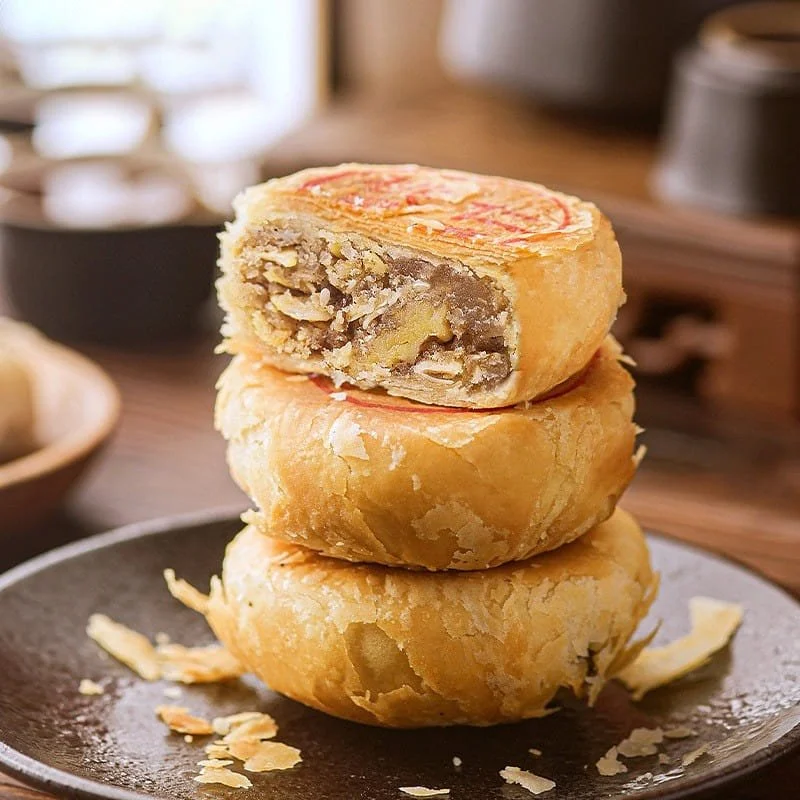
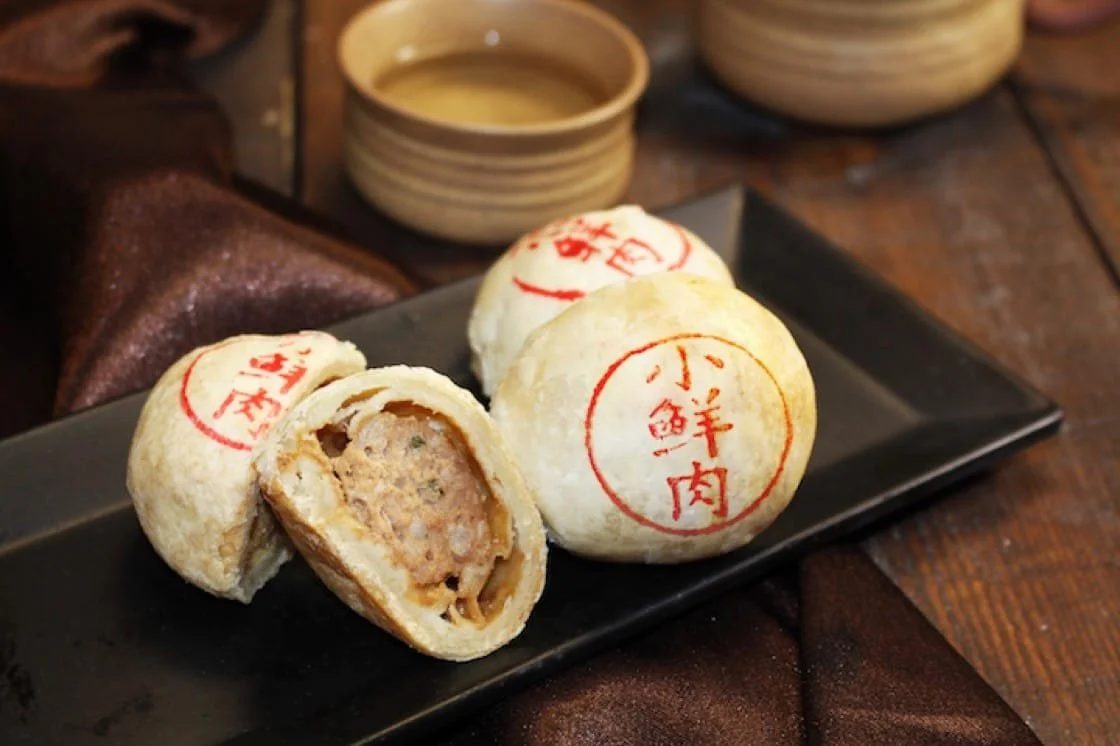
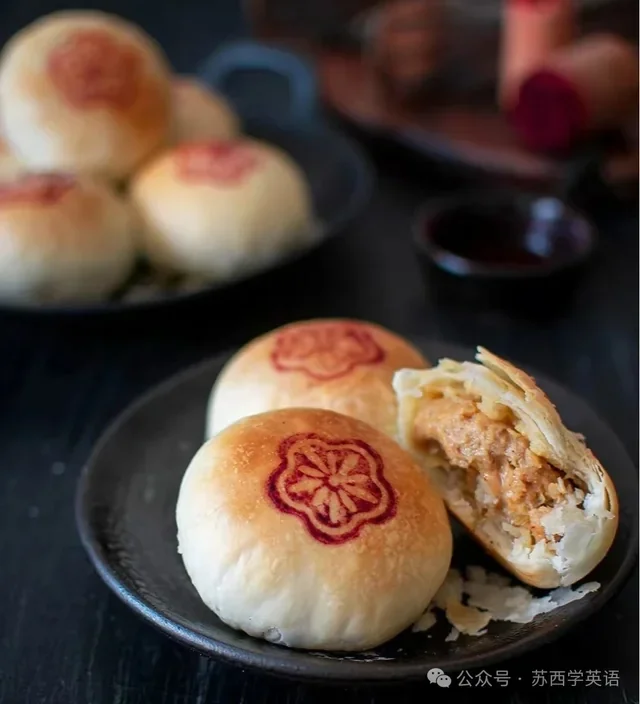
Images of Suzhou mooncakes by Wee!, Michelin Guide, & Inspirlang
Yunnan mooncakes
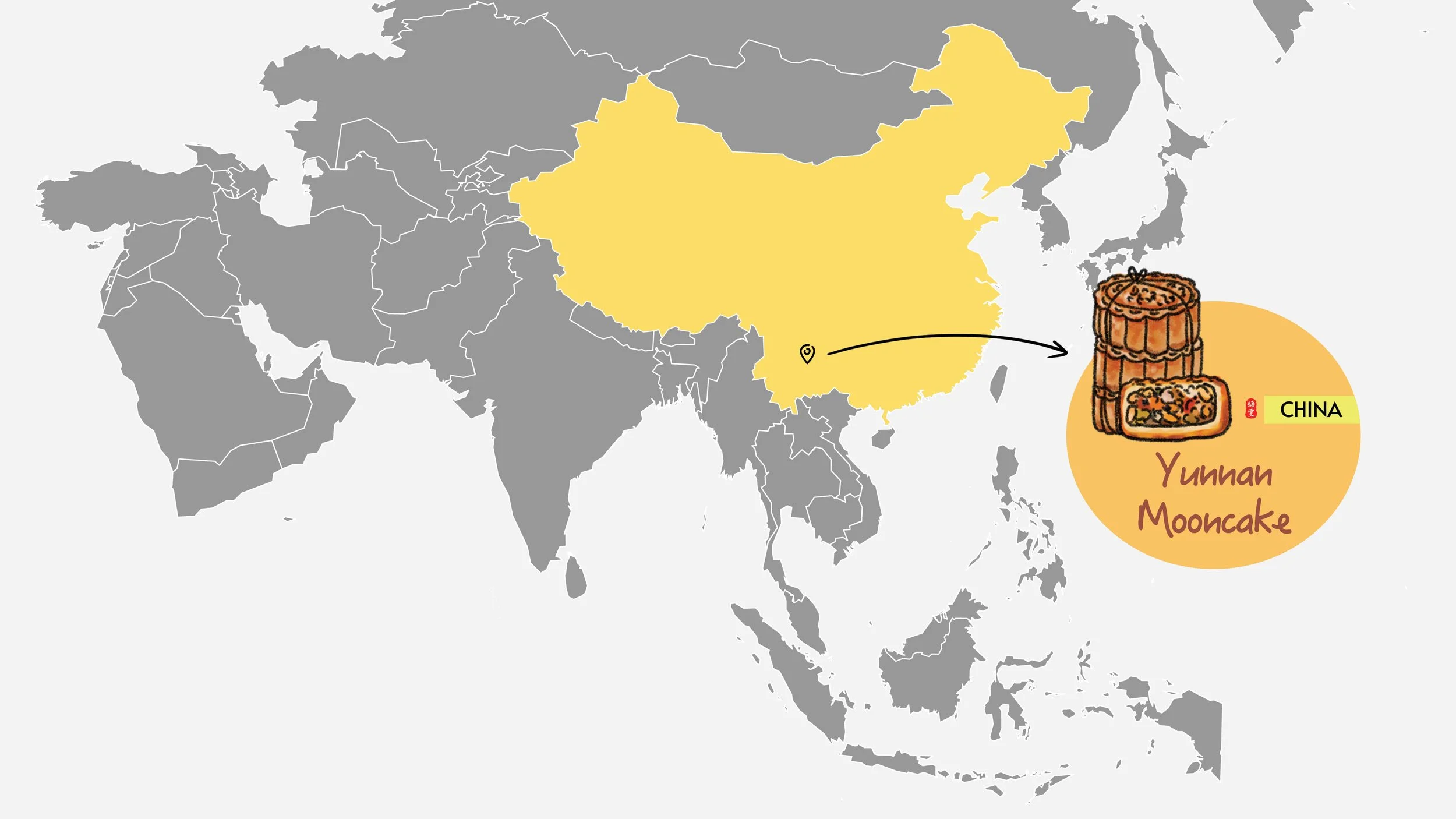
Visual Map of the Yunnan mooncake by Zhi Wen Design
The Yunnan mooncakes hail from Yunnan province in southwestern China, a region known for its dramatic landscapes of karst peaks, high plateaus, and lush valleys along with its remarkable cultural diversity. Home to dozens of ethnic groups, including the Yi, Bai, Dai, and Hani; Yunnan’s culinary identity blends Han Chinese traditions with local ingredients and cross-border influences from Southeast Asia. Mooncakes from this region reflect that intersection: rustic yet refined, rooted in local produce and ceremonial life. Yunnan mooncakes tend to lean towards a mix of rustic charm and decorative simplicity. Traditional shapes include the familiar round or square cake, but you’ll also find floral or emblematic motifs influenced by local textiles, pottery, and minority embroidery patterns. The crust often has a golden-baked, slightly glossy finish with pressed stamps that depict moon motifs, flowers, or auspicious characters. Some artisan versions celebrate regional aesthetics with natural dyes-tea, beet, or flower extracts, giving subtle hues that echo Yunnan’s landscapes: tea-green, amber, or rose-pink. The texture of the mooncake can range from tender and flaky to dense and slightly chewy, depending on whether the crust is oil-based, baked, or steamed. Common and characteristic fillings include:
Yunnan ham and mixed nuts: Salty-sweet blends featuring cured Xuanwei or Jinhua-style ham paired with walnuts, sesame, and melon seeds for an umami dimension.
Plateau tea paste: Smooth pastes made from locally grown Pu-erh or Yunnan black tea, often mellow, earthy, and slightly tannic, sometimes sweetened with malt or rock sugar.
Chestnut and sweet potato: Celebrating mountain tubers and nuts, these fillings are sweet, creamy, and nutty with a rustic mouthfeel.
Tropical fruit preserves: In southern Yunnan, fillings may include mango, passionfruit, or candied kumquat for bright acidity and fragrance.
Flower-scented creams: Jasmine, rose, or osmanthus-infused pastes impart floral perfume common to local confectionery.
Red bean with spice: Classic red bean paired with local spices- ginger, five-spice, or Sichuan pepper- adds warmth and gentle numbing spice notes.
Visually understated yet carefully detailed, and flavorfully diverse from earthy Pu-erh pastes to savory ham-and-nut blends, they offer a regional take on a pan-Chinese custom, rooted in harvest, community, and the layered tastes of Yunnan’s soil and trade history.
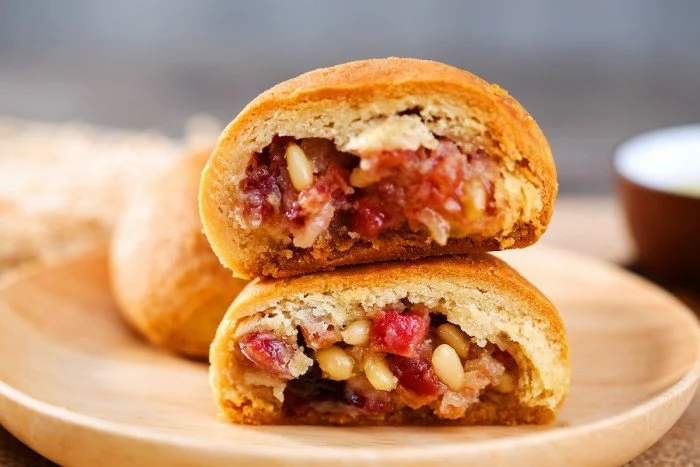
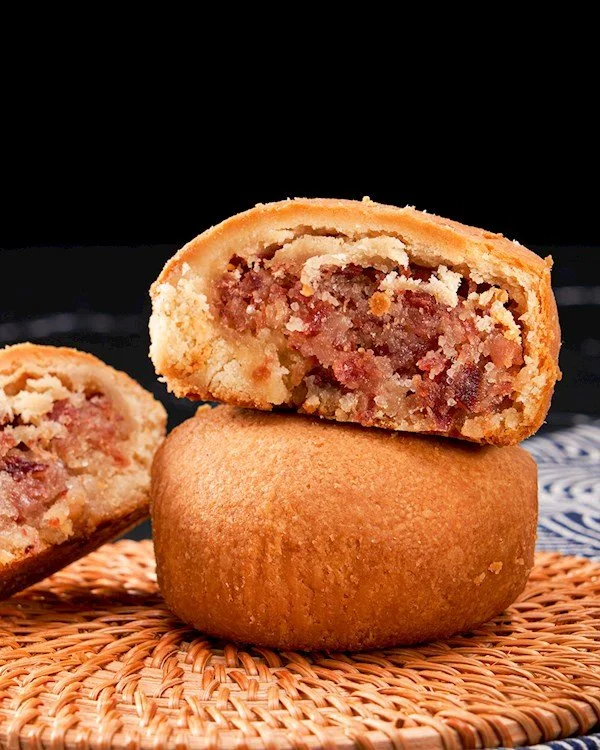
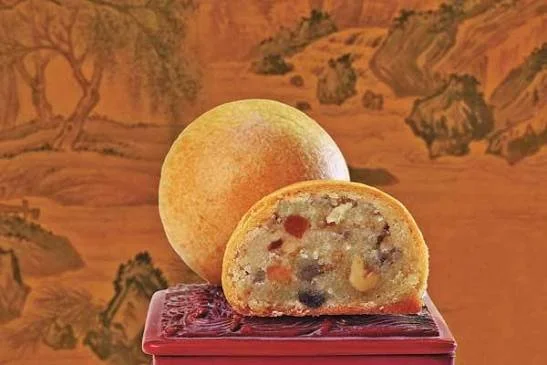
Images of the Yunnan mooncake by Taste Atlas, China Daily, & Hello Tea Cup
Cantonese mooncakes
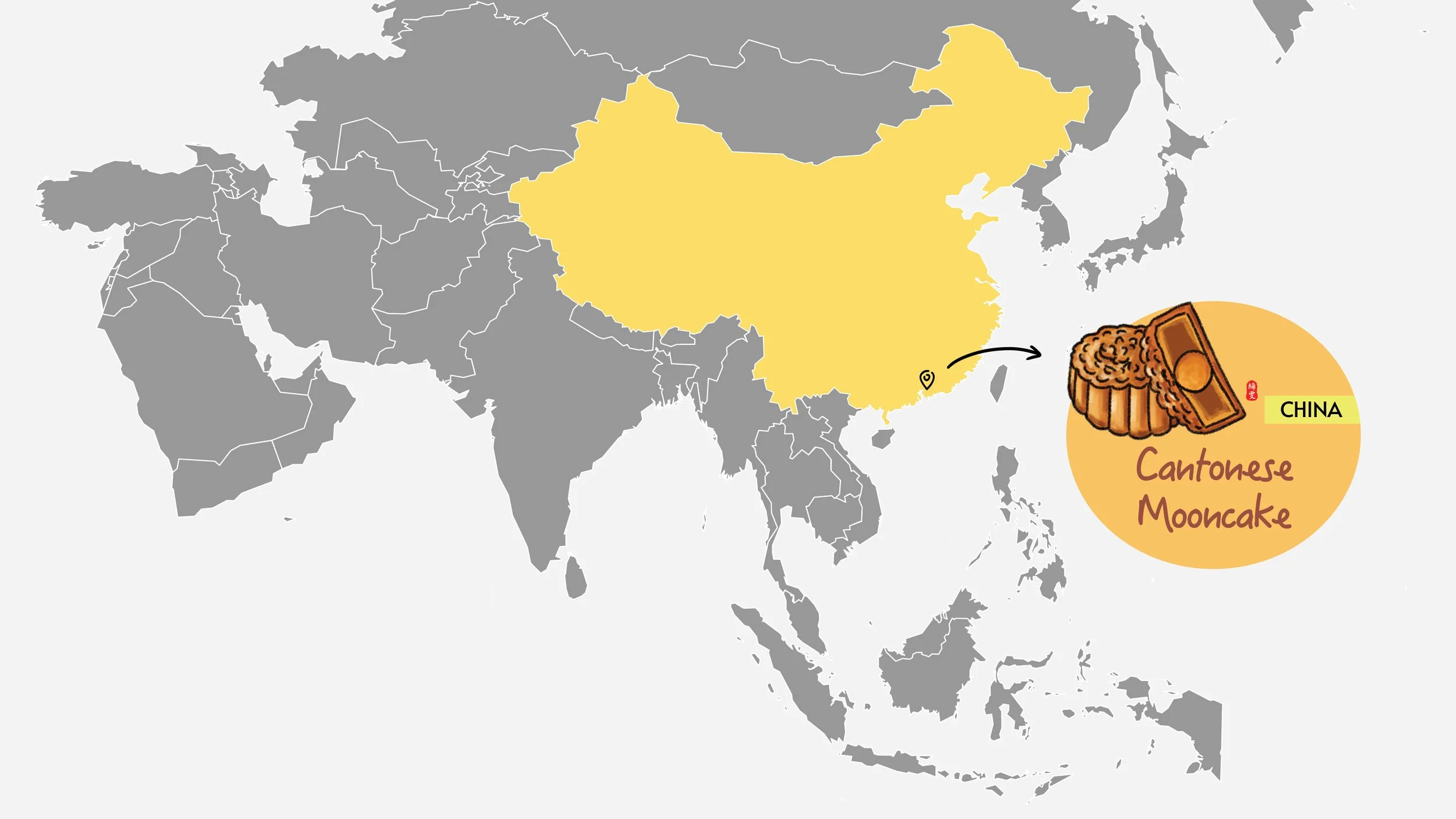
Visual Map of the Cantonese mooncake by Zhi Wen Design
Cantonese mooncakes embody the elegance and refinement of Guangdong’s culinary and cultural heritage. Originating in southern China, particularly the Pearl River Delta cities of Guangzhou, Shenzhen, and the surrounding Cantonese-speaking region, these mooncakes reflect the region’s love of balanced flavors, delicate textures, and aesthetic presentation. Cantonese mooncakes are typically round as a symbolic of completeness and it feature an outer tender golden-brown crust with a smooth, glossy finish. The surface is embossed with intricate molds: auspicious Chinese characters (such as “寿” for longevity or “福” for luck), floral motifs, or maker’s seals. The sizes of the mooncakes range from small single-serving cakes to larger ones meant for sharing, where else the packaging is often refined and colorful, combining traditional motifs with modern artistry, reflecting the region’s blend of classical taste and contemporary design sensibilities.
What distinguishes Cantonese mooncakes most is their diverse, finely balanced fillings and a relatively thinner, tender skin. Classic fillings include:
Lotus seed paste: Silky, subtly sweet, and smooth, often paired with one or more salted duck egg yolks that add umami richness and a sun-like golden center.
Red bean paste: Fragrant and mildly sweet, with a clean finish that complements the pastry shell.
Mixed nuts and ham (five-kernel): A crunchy, savory-sweet mix of chopped nuts, seeds, and sometimes roasted meats or candied winter melon, offering complexity and texture.
Cantonese mooncakes are traditionally enjoyed with Chinese tea, oolong, pu-erh, or jasmine; which cuts richness and refreshes the palate. They are sliced into wedges and shared, often accompanied by conversation, moon-gazing, and the exchange of wishes and gifts.
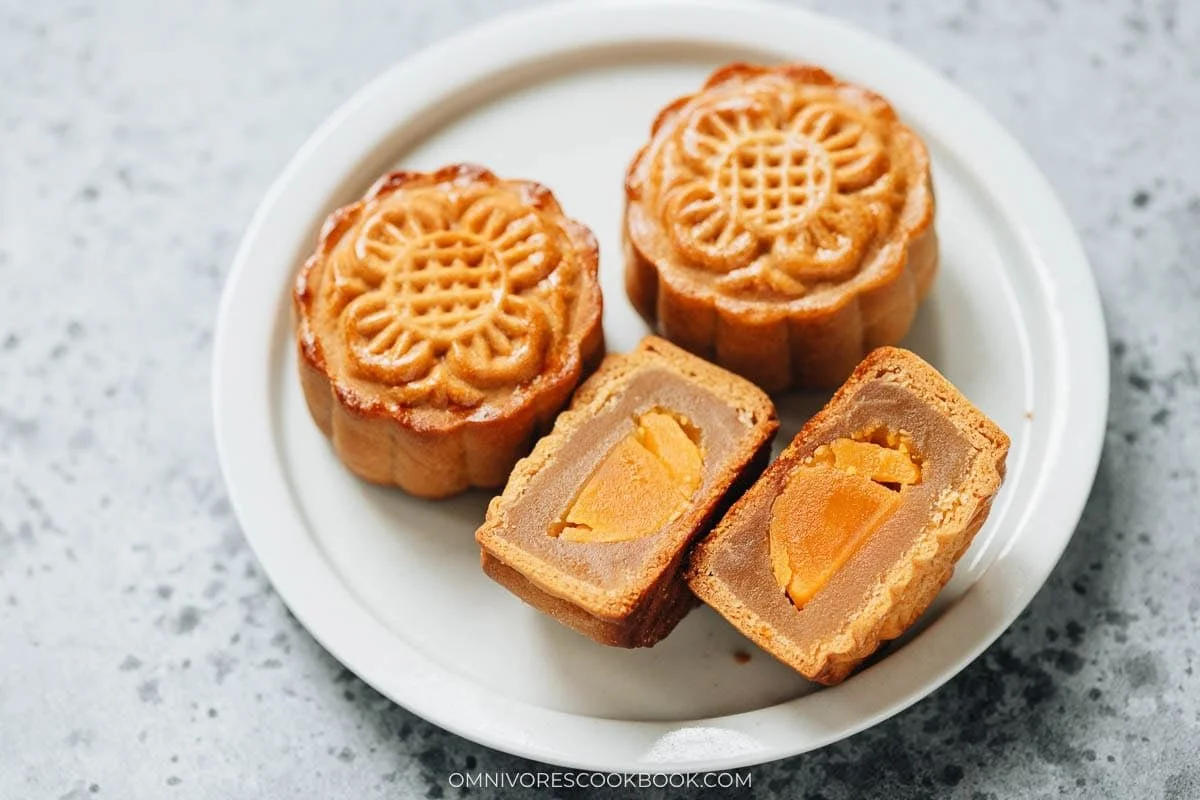
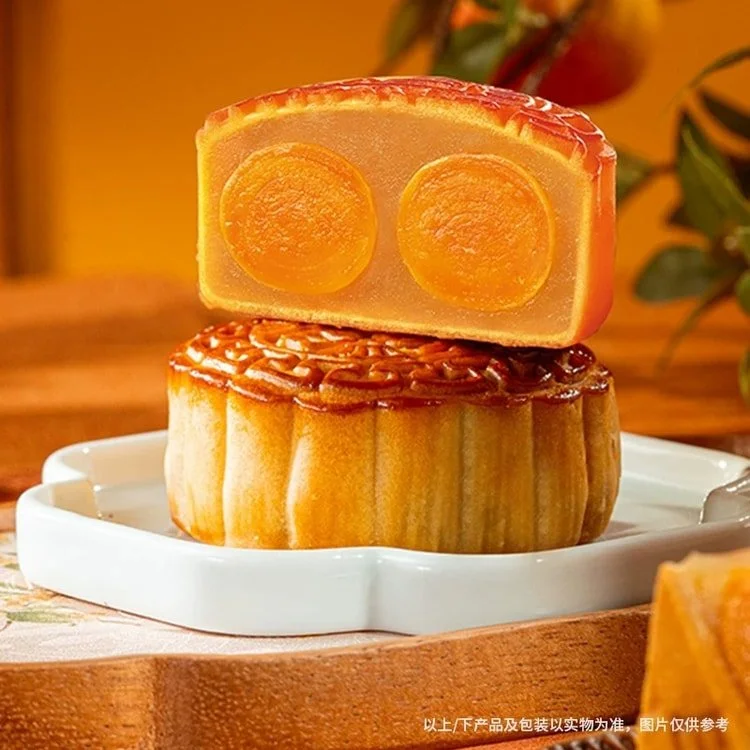
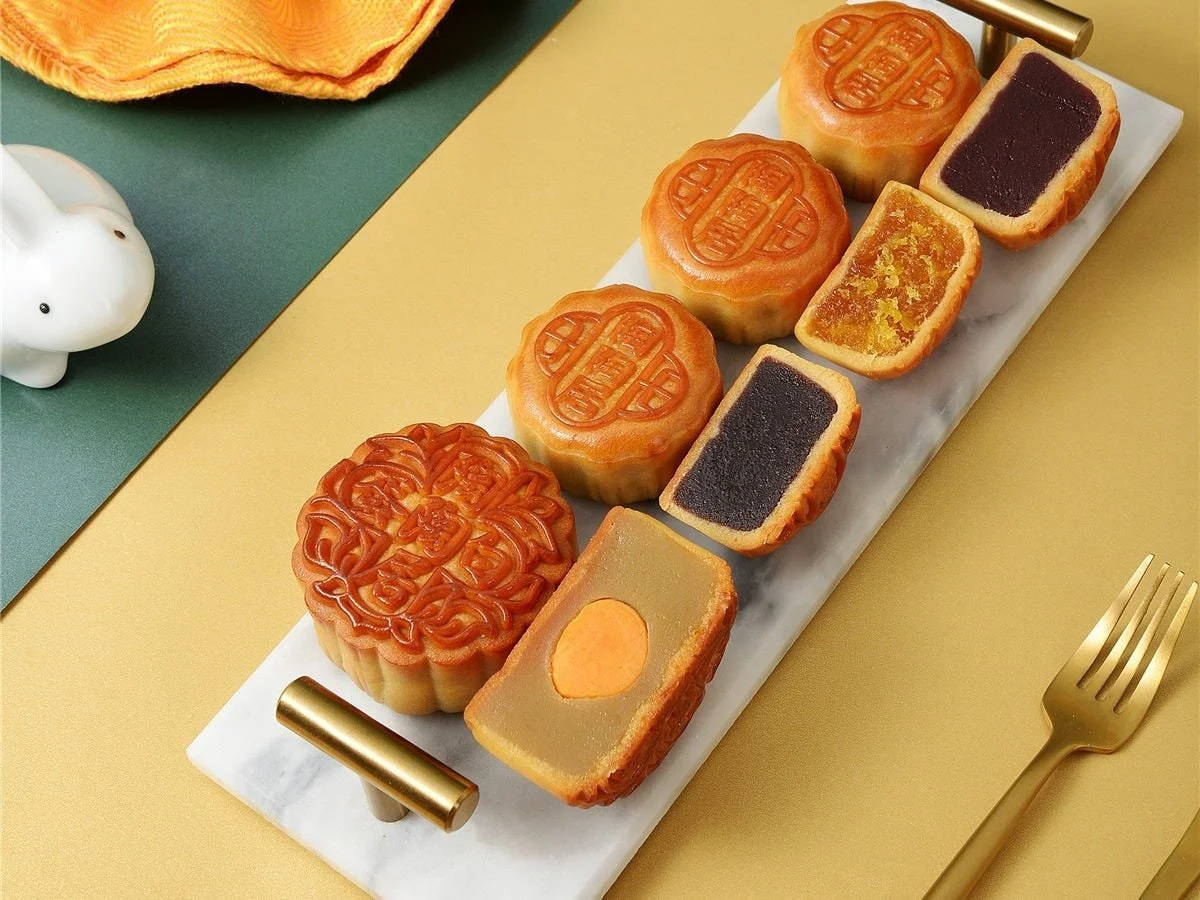
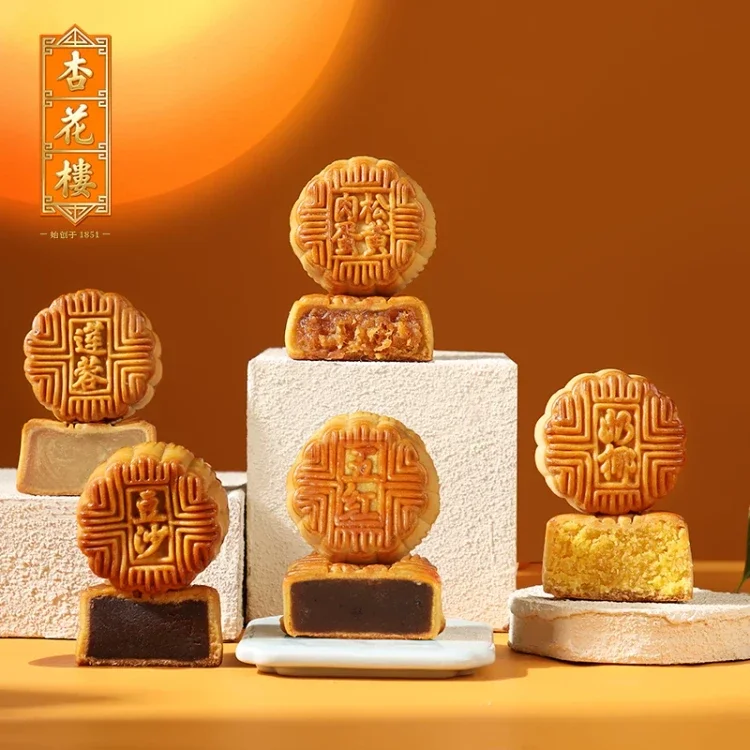
Images of the Cantonese mooncake by Omnivore’s Cookbook, Chili Crisp, & Yami
Snow skin mooncakes
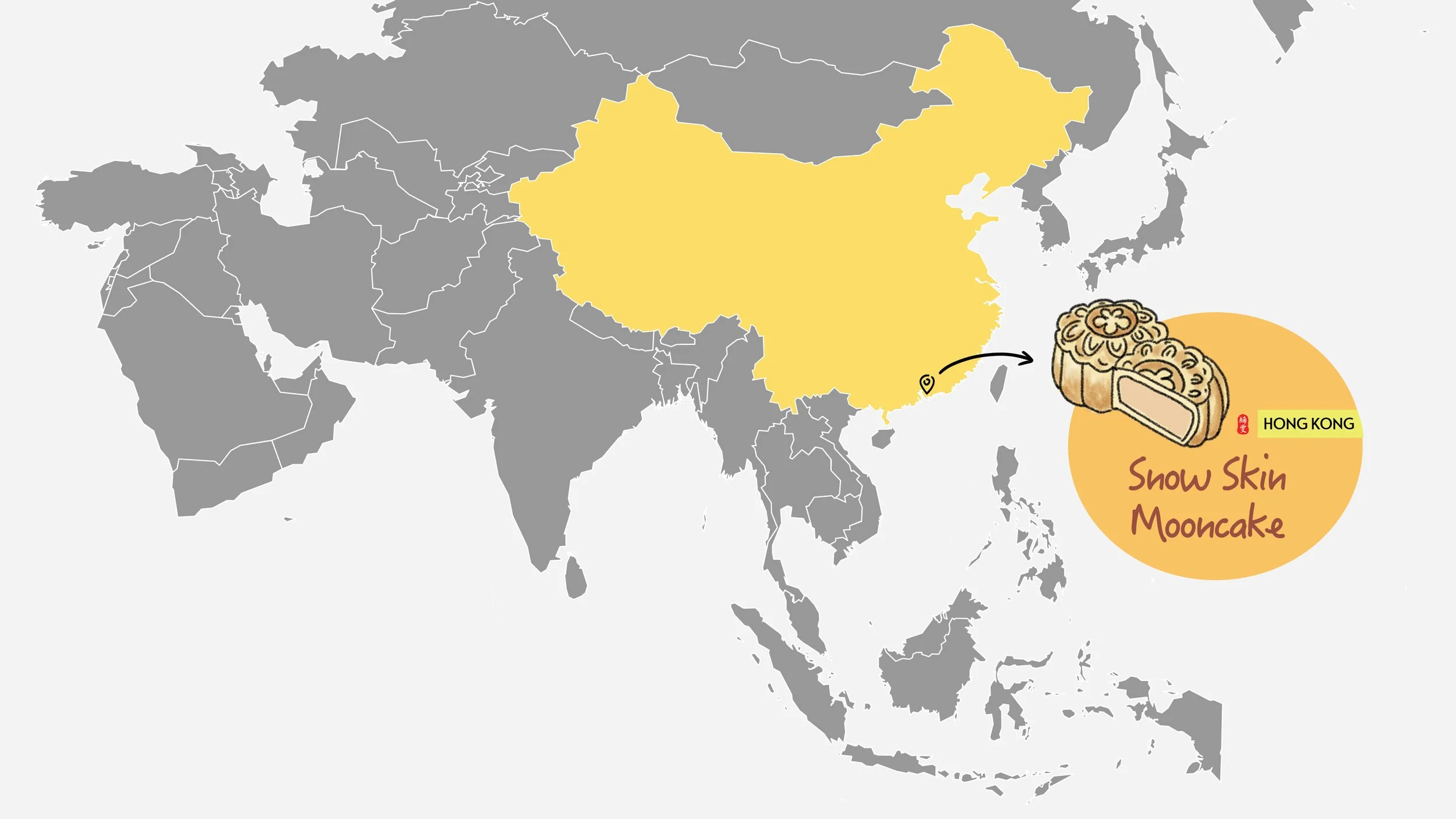
Visual Map of the Snow Skin mooncake by Zhi Wen Design
Snow skin mooncakes (冰皮月饼, bing pi yuebing) originated in Hong Kong in the 1980s as a refrigeration-era innovation and rapidly spread across southern China, Taiwan, Southeast Asia, and overseas Chinese communities. They are especially popular in regions with strong Cantonese culinary influence and in places where chilled desserts are favored year‑round. Developed as a non‑baked alternative to the classic lotus‑seed and salted‑egg yolk mooncakes, snow skin mooncakes were first created by pastry chefs seeking a lighter texture and extended shelf life via refrigeration. Their rise coincided with evolving tastes in the late 20th century: greater interest in chilled desserts, fusion flavors, and contemporary presentation.
Snow skin mooncakes are characterized by a soft, slightly chewy outer “skin” made from glutinous rice flour and rice flour blends, which gives them a smooth, pillowy look. The skin’s color palette ranges from pale pastels to vivid hues—natural or tinted with matcha, pandan, taro, fruit purees, or food coloring—allowing for strong visual creativity. Molds imprint decorative patterns on the skin: traditional motifs (lotus, moon, auspicious characters) or modern icons (geometric patterns, floral motifs, whimsical illustrations). Packaging tends toward contemporary elegance: individual trays, clear lids, and gift boxes with compartments to keep shapes pristine. Because they’re served chilled, condensation-free presentation and insulated packaging are common features for gifting and retail.
Fillings for snow skin mooncakes are diverse and inventive, spanning traditional pastes to modern cream and savory‑sweet hybrids:
Traditional pastes: red bean, mung bean, sesame paste, and lotus seed—but often prepared lighter and less oily than their baked counterparts.
Nuts and seeds: peanut, walnut, almond pastes, sometimes mixed with crystalized sugar or chewy bits for textural contrast.
Custards and creams: durian, salted‑egg custard (a popular hybrid), chocolate ganache, matcha cream, and fruit curd fillings that bring a creamy or molten center.
Fresh fruit and purées: mango, strawberry, yuzu, and lychee bring bright acidity and freshness, often paired with complementary creams.
Fusion and modern flavors: hojicha, taro‑coconut, espresso, cheese (cream cheese or mascarpone blends), and floral infusions like osmanthus or rose.
Textural surprises: whole salted‑egg yolks (rare but trendy), nut pralines, chewy mochi inserts, or popping boba are used creatively by contemporary pastry artists.
Recent trends emphasize health-conscious and artisanal approaches: reduced sugar, natural colorants (matcha, butterfly pea, beet), plant‑based fillings, and small‑batch craft variants. Chefs experiment with cross‑cultural pairings (yuzu‑cheesecake, hojicha‑black sesame) and photogenic designs suited for social sharing. Snow skin mooncakes have evolved into a canvas for pastry innovation while remaining a beloved seasonal delicacy tied to Mid‑Autumn traditions.
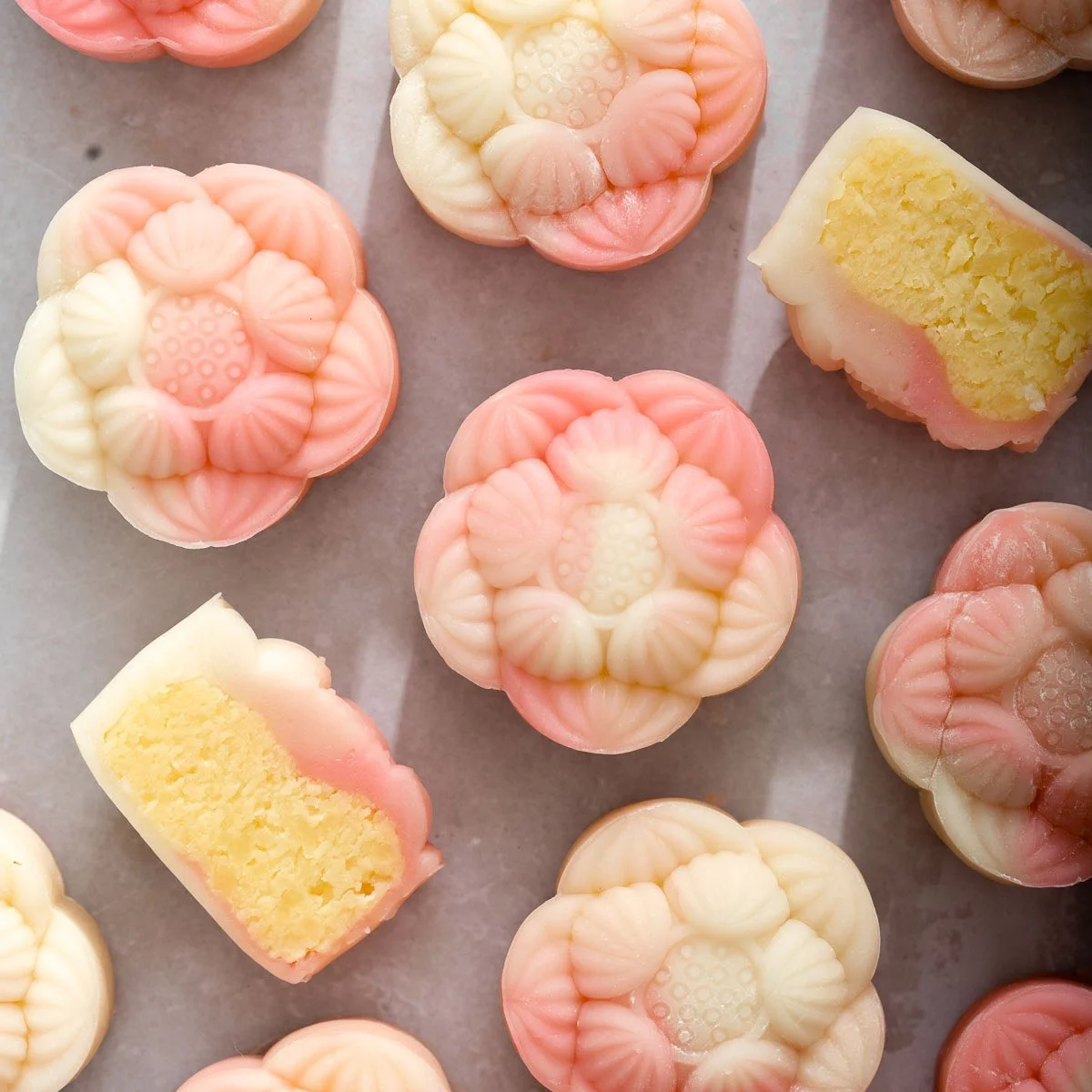
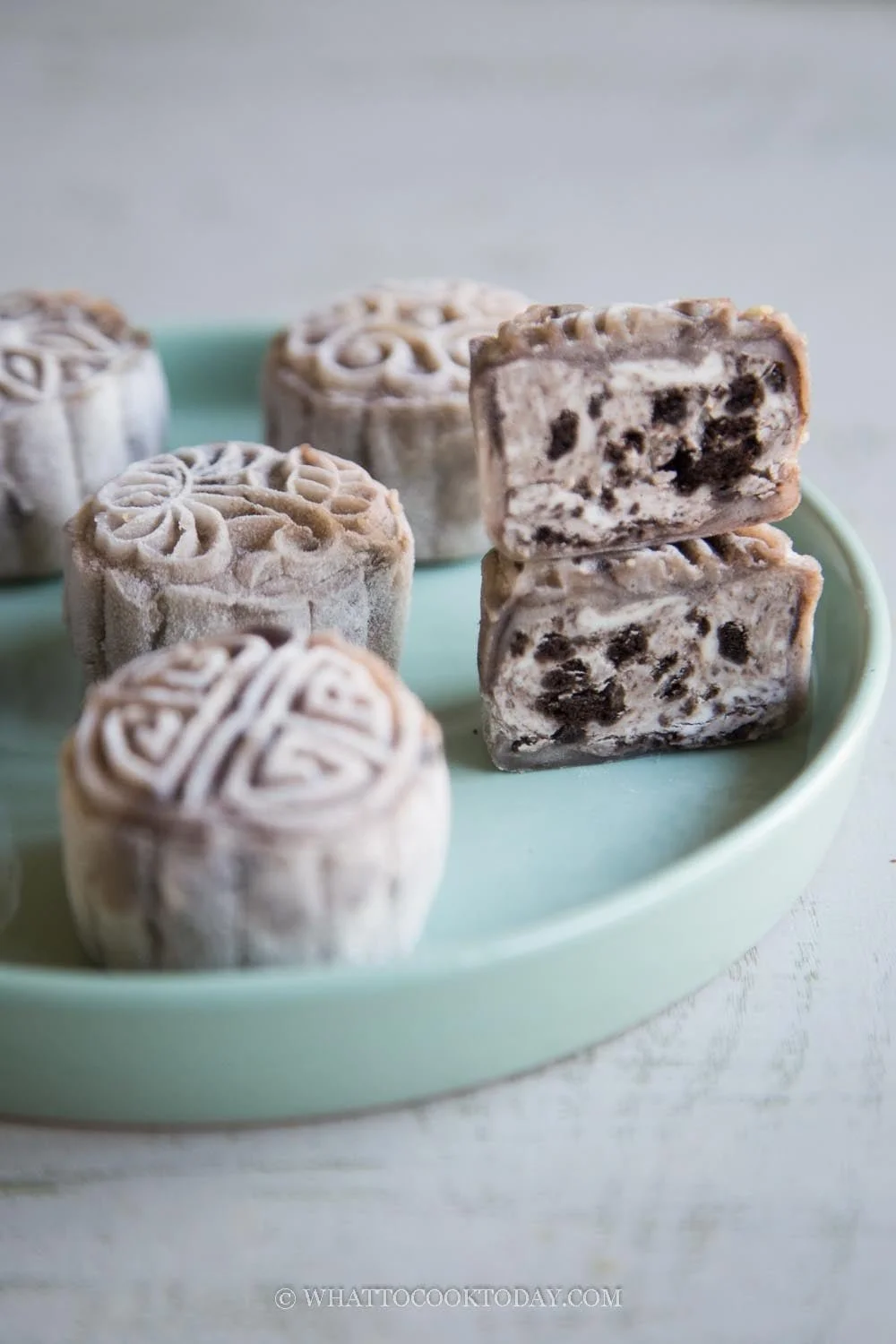
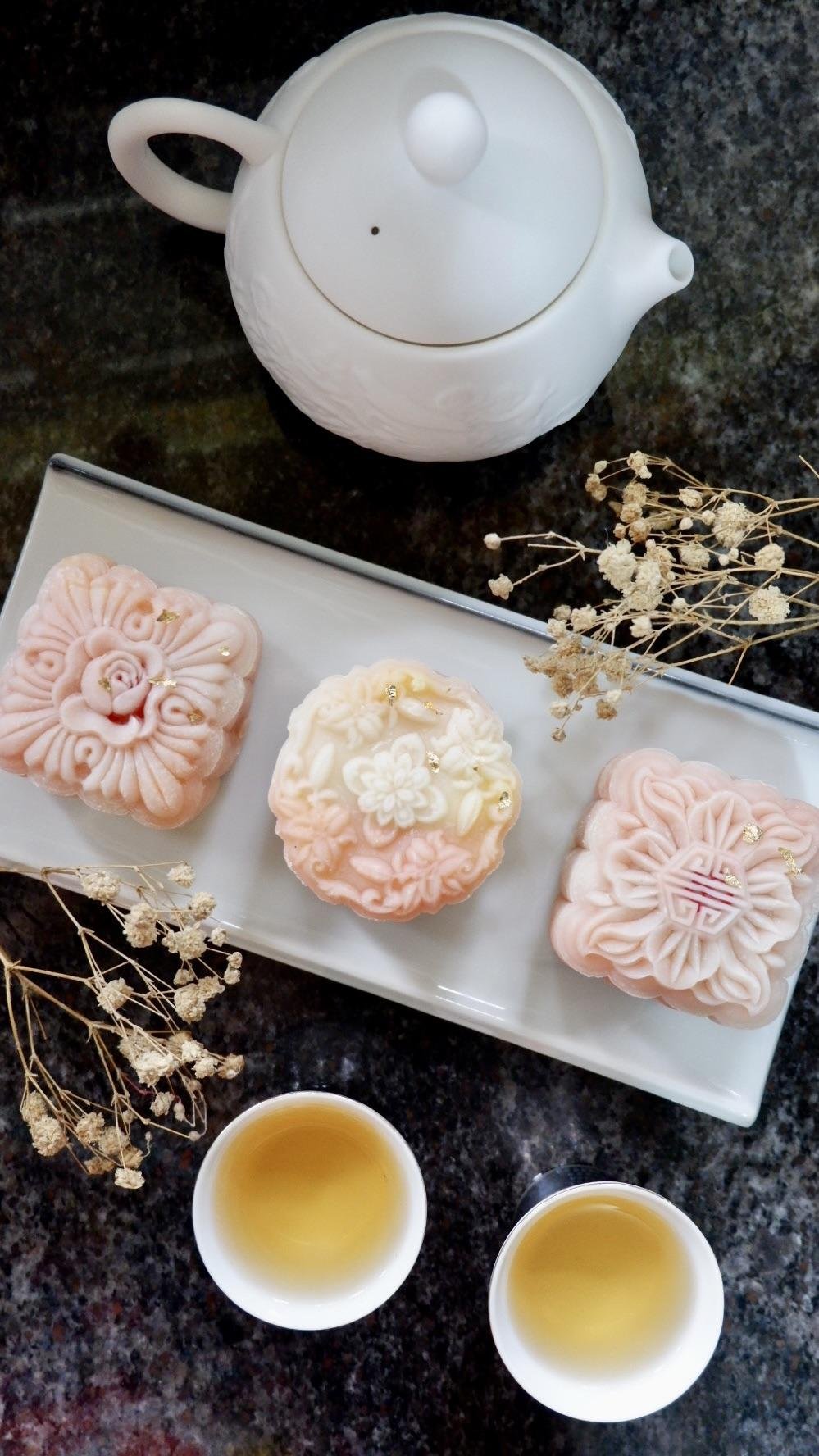
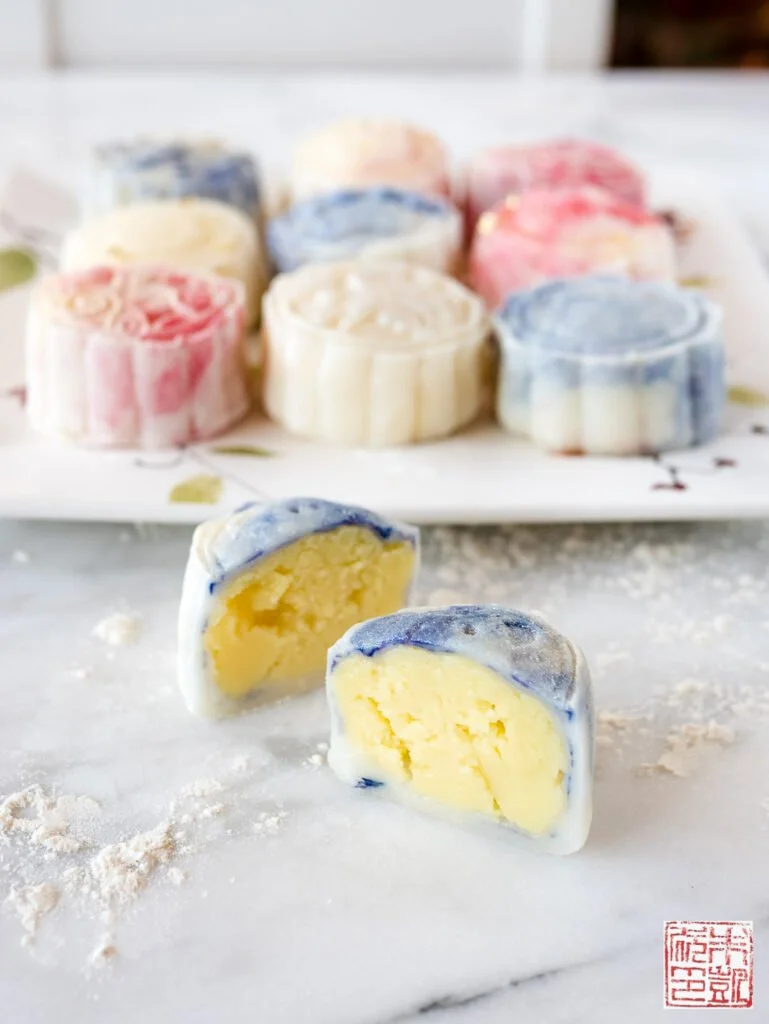
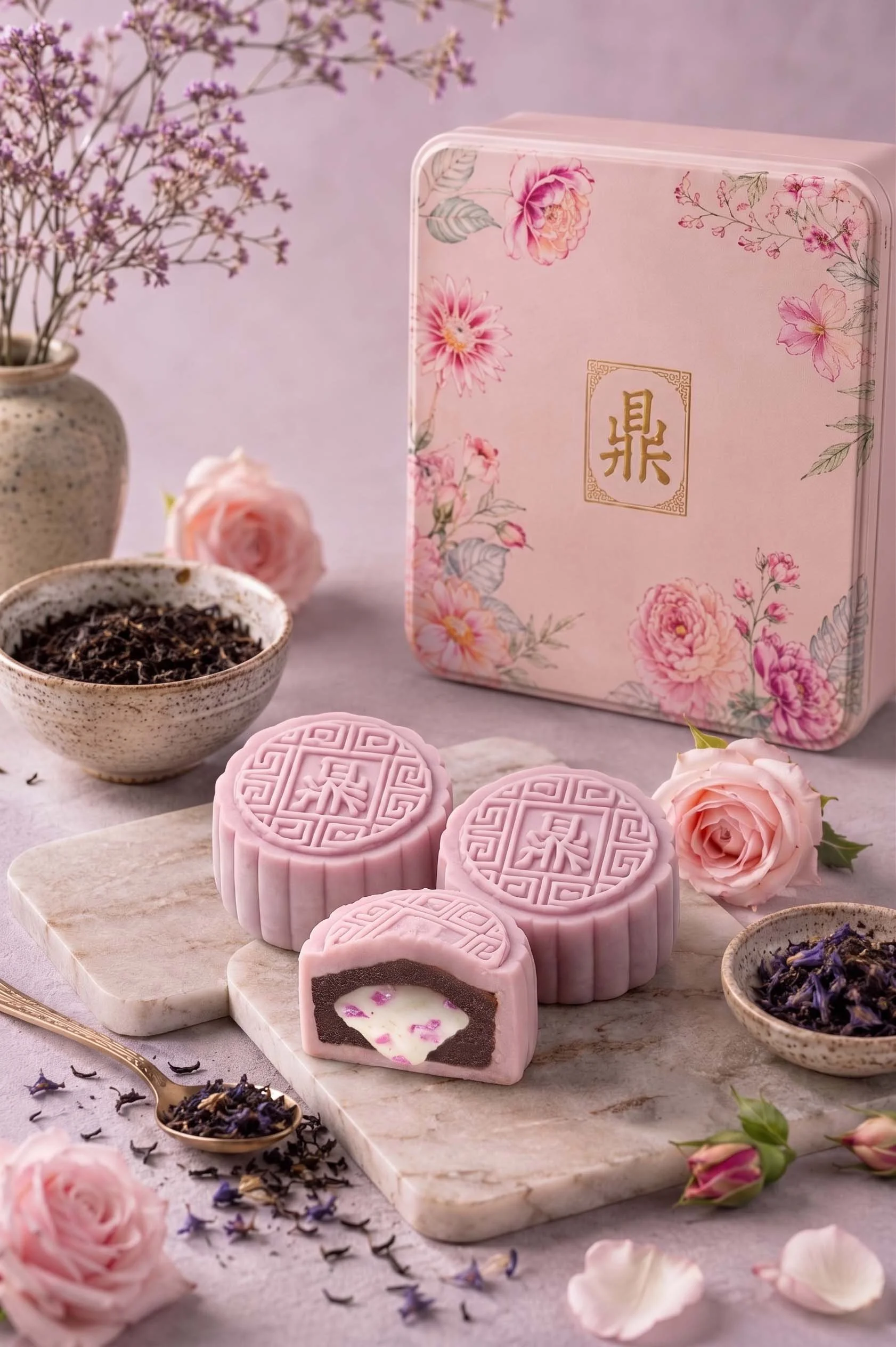
Images of the Snow Skin mooncake by Takes Two Eggs, What To Cook Today, Dessert First, Impractical Dreamer, & Ding Mooncake SG
Hokkien Scholar mooncakes
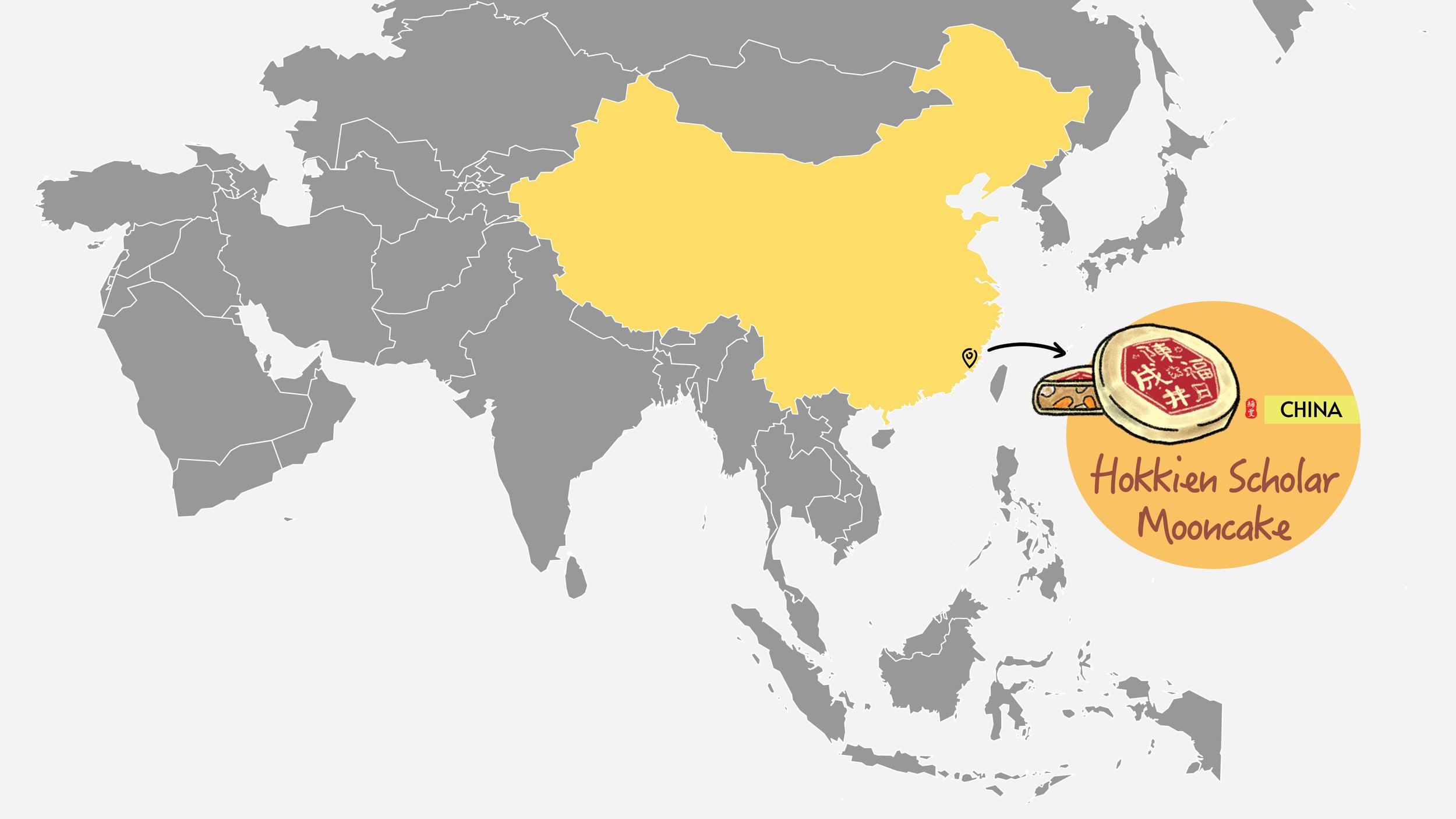
Visual Map of the Hokkien Scholar mooncake by Zhi Wen Design
Hokkien scholar mooncakes originate from the Fujian province and the Hokkien-speaking communities along China’s southeastern coast and Taiwan. These mooncakes reflect the maritime trade routes, rice-farming valleys, and vibrant clan cultures of the region. Coastal spices, tropical fruits, and cross-Strait influences shape their flavors and presentation. The scholar mooncake traces its roots to filial and scholarly traditions celebrated during the Mid-Autumn Festival. In Hokkien communities, families honored scholars and exam success in both civil examinations and local accomplishments by gifting refined pastries. Over centuries, the mooncake evolved from simple rice-based sweets into a more elaborate confection, blending local ingredients and artisanal techniques. Traders and emigrants from Fujian carried these recipes overseas, where they absorbed new fillings and design elements while preserving their symbolic significance.
Visually, Hokkien scholar mooncakes balance elegance with symbolism. Traditional molds press intricate patterns and stylized Chinese characters for “scholar,” “success,” or “longevity,” and motifs like plum blossoms, bamboo, or ink brushes. Shapes may be round to evoke the moon, or slightly flattened to display a central emblem resembling a scholar’s seal. The crust ranges from pale, tender pastry to a slightly glossy, golden-brown finish, sometimes dusted with crushed peanuts or sesame. Contemporary versions incorporate watercolor-like motifs, paper-cut silhouettes, or delicate lacquered finishes to appeal to modern tastes while retaining classical symbolism.
The fillings highlight Fujian’s agricultural and coastal bounty, emphasizing balance between sweet, savory, and textural contrast:
Sweet yam paste: smooth purple or taro paste sweetened and lightly roasted for depth.
Jujube and lotus: slow-cooked red date paste blended with silky lotus seed paste, giving a fruity warmth and velvety mouthfeel.
Mung bean and pandan: light, fragrant mung-bean paste perfumed with pandan leaf for a fresh, grassy note.
Five-kernel (wugen): a crunchy mix of chopped walnuts, almonds, pumpkin seeds, sesame, and melon seed bound with maltose, symbolic and texturally vibrant.
Salted egg yolk: occasionally included at the center to represent the full moon’s richness, pairing especially well with denser pastes.
Savory-sweet variations: small-batch recipes may incorporate minced dried shrimp or preserved radish for an umami counterpoint in festive, region-specific versions.
A Hokkien scholar mooncake is meant to be savored in small slices with tea such as oolong or lightly roasted pu’er, so the layers of flavor and texture can be appreciated. The pastry yields a tender bite that contrasts with the dense, fragrant filling; where salted yolk appears, its melt-in-the-mouth richness punctuates the sweetness. Beyond flavor, each cake conveys cultural stories: a wish for scholarly success, familial bonds, and the comfort of shared tradition.
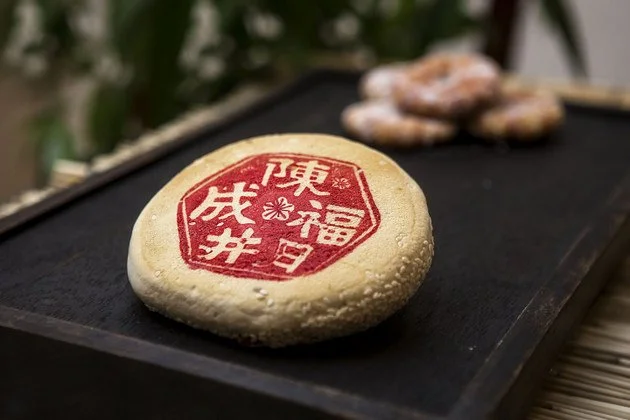
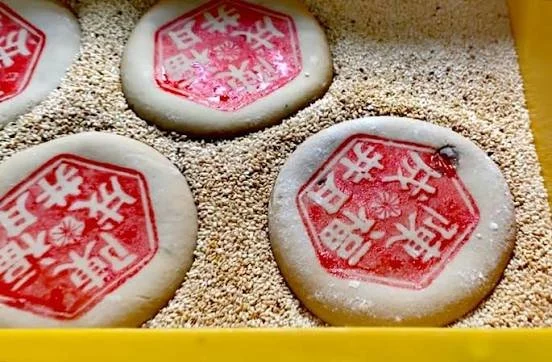
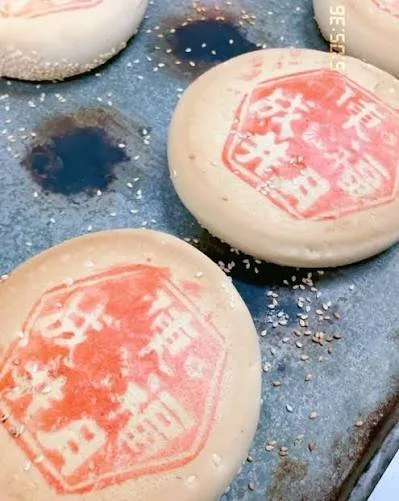
Images of the Hokkien Scholar mooncake by Makansutra, Tan Hock Seng SG, & China Daily Hong Kong
Beijing Zalaihong mooncakes
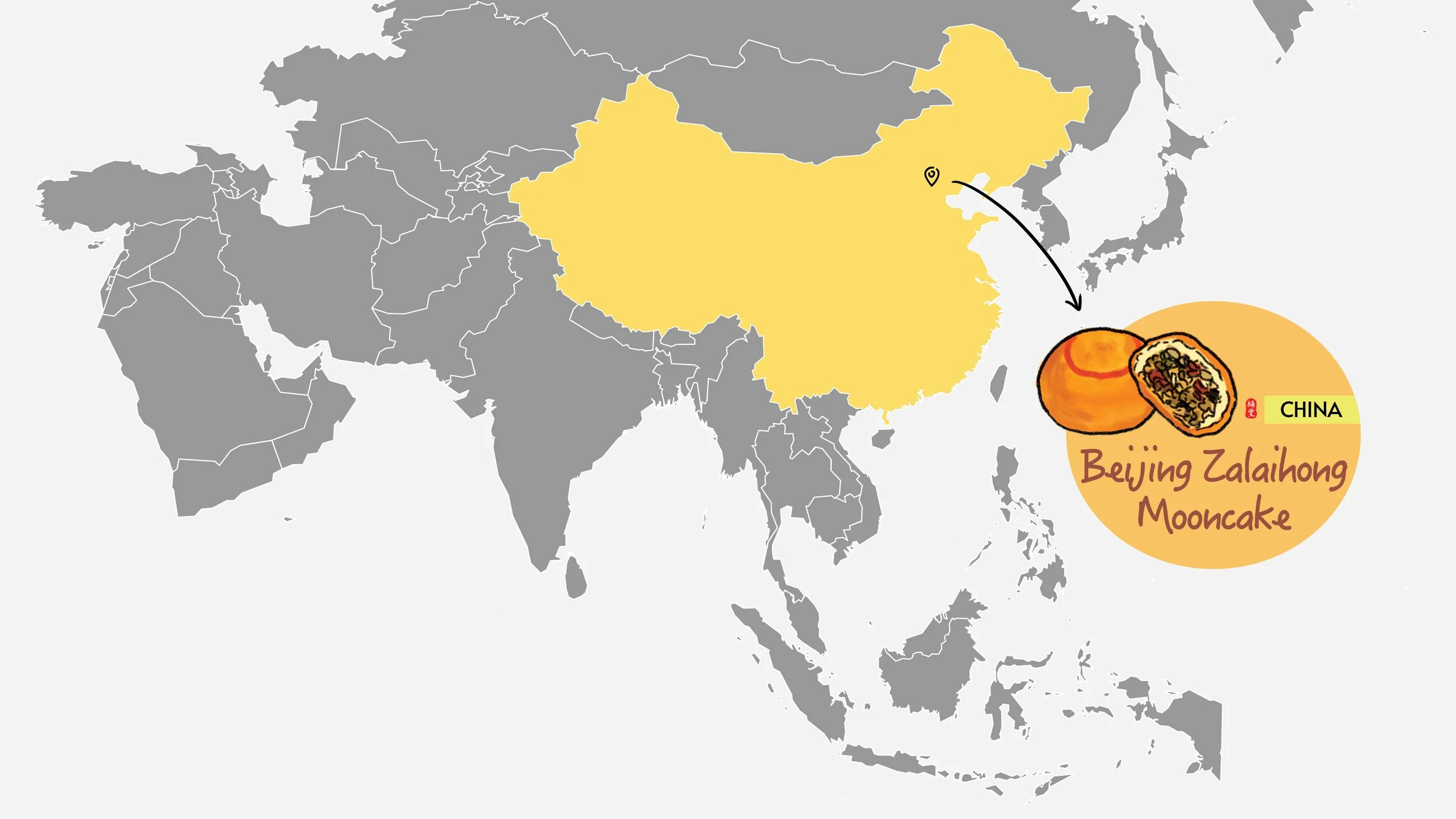
Visual Map of the Beijing Zalaihong mooncake by Zhi Wen Design
Zalaihong mooncakes hail from Beijing, the capital city of China where imperial tradition and modern life overlap. Rooted in the cosmopolitan culinary culture, these mooncakes reflect Beijing’s seasonal festivals, teahouse scenes, and palace-era influences. In Beijing, mooncakes carry strong ties to imperial ritual, family reunion, and literary gatherings. Zalaihong mooncakes are inspired by that heritage: they emerged as an evolution of classic northern mooncakes during the late Qing and Republican eras, when pastry makers in the capital experimented with fillings and decorations to please sophisticated courtly and urban palates.
Zalaihong mooncakes are visually distinctive. Typically round and medium-sized, their crusts have a warm, golden-brown sheen achieved by careful egg-washing and moderate baking. The fillings emphasize balanced sweetness and robust, comforting textures suited to northern tastes. Traditional fillings include:
Sweet red bean paste: smooth but with body, made from mashed adzuki beans simmered and sweetened until silky.
Lotus seed paste: dense, velvety, and mildly floral—often the premium choice for celebratory mooncakes.
Jujube and walnut: a rustic, earthy blend with chopped nuts providing pleasant crunch against a thick fruit paste.
Savory-sweet five-kernel (wuren): a mix of seeds and nuts—walnut, melon seed, sesame, almond, and peanut—tied together with maltose for chew and texture.
Many Zalaihong mooncakes feature a slightly lower sugar profile than southern varieties, allowing the natural flavors of beans, seeds, and nuts to come forward. Some contemporary bakers add small innovations—green tea, osmanthus, or red date accents—to bridge tradition with modern tastes. Beijing Zalaihong mooncakes are an expression of northern refinement: visually restrained yet intricate, texturally satisfying, and flavored with ingredients that evoke hearth and city. They bridge imperial past and contemporary urban life, making them both a ceremonial delicacy and a comforting everyday treat during the Mid-Autumn season.
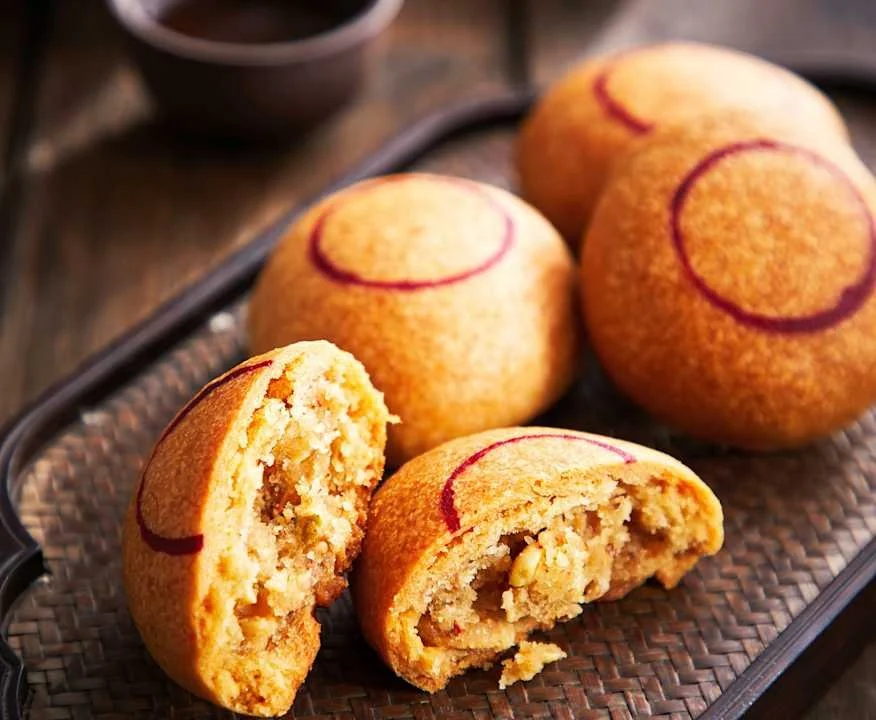
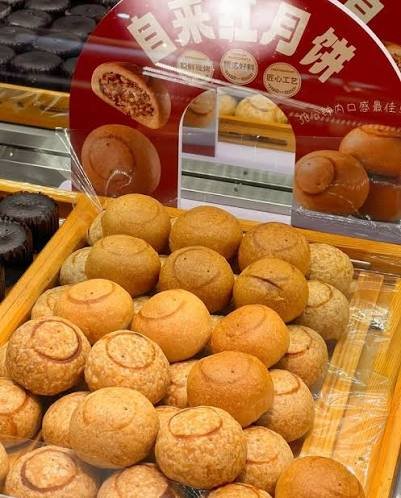
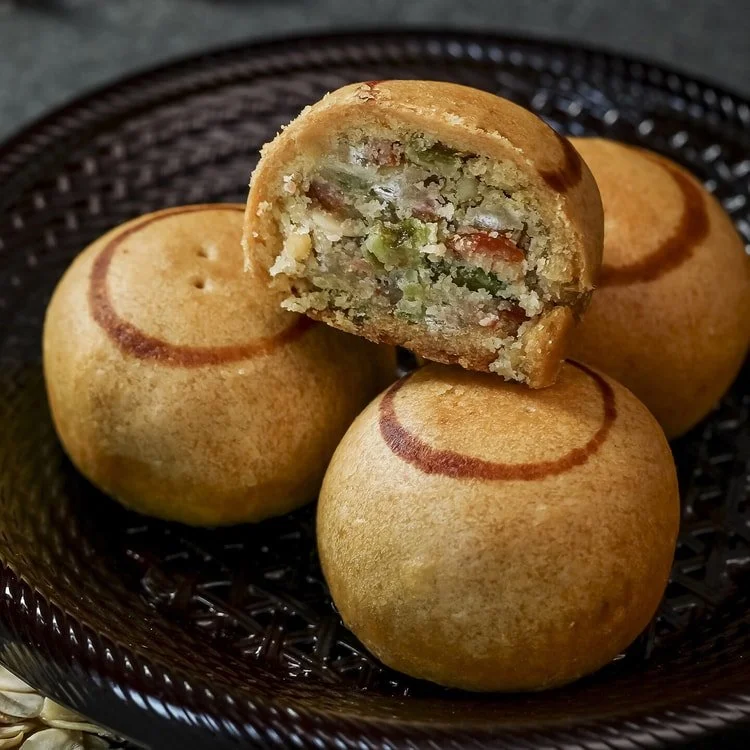
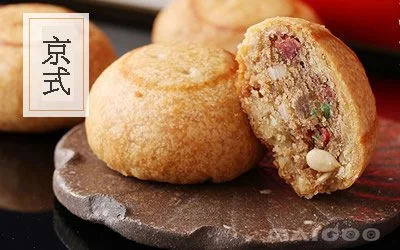
Images of the Beijing Zalaihong mooncake by Thermomix, Discover Beijing, Yami, & Snow Pavillion
Shanghai mooncakes
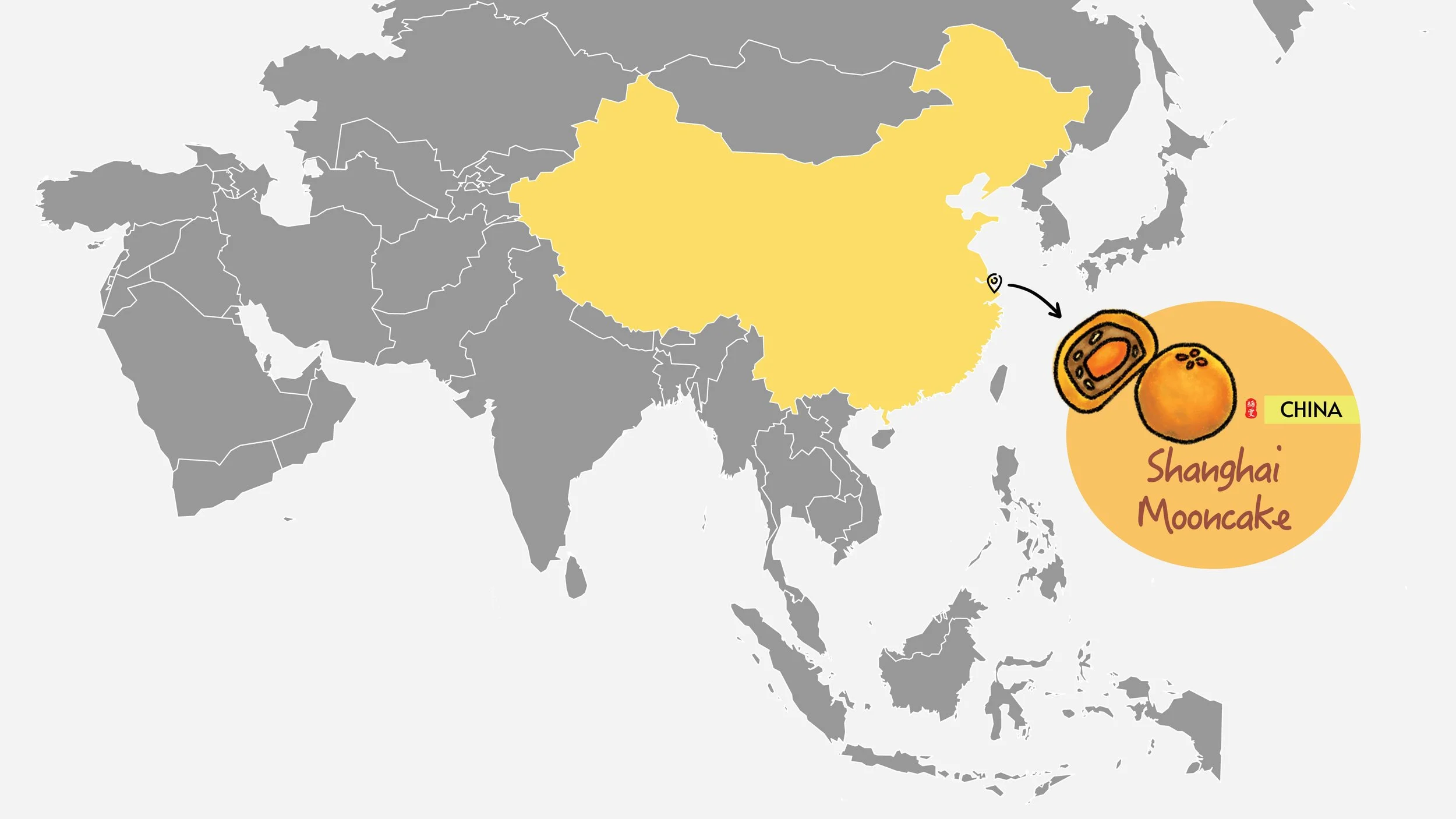
Visual Map of the Shanghai mooncake by Zhi Wen Design
Shanghai mooncakes are an understated elegance in pastry form, reflecting the city’s blend of refined taste and practical simplicity. Originating in the Yangtze River Delta, their character is shaped by regional culinary traditions, the area’s mercantile history, and Shanghai’s long-standing love of delicate, mildly sweet flavors. Emerged from the same moon festival traditions as other mooncakes but evolved locally to suit urban tastes, Shanghai mooncakes are smaller in sizes with thinner crusts and gentler sweetness. Classic fillings include:
Sweet bean pastes: red bean and mung bean pastes that are silky, mildly sweet, and finely refined.
Lotus seed paste: when used, it’s less oily and more subtly sweet than the denser southern versions.
Savory-sweet combinations: Shanghai mooncakes sometimes feature fillings like taro, black sesame, or mixed nuts that are balanced rather than intensely sugary.
Contemporary variations: cream cheese, fruit jams, matcha, and even custard have been adapted into local-style mooncakes but always with an eye toward restraint in sweetness and a pleasing texture contrast with the thin crust.
Shanghai mooncakes epitomize refined moderation: gentle, balanced, and crafted for everyday urban celebration. They reflect Shanghai’s cultural blend, traditional festival symbolism fused with metropolitan taste, producing a pastry that’s elegant, gift-ready, and quietly sophisticated.
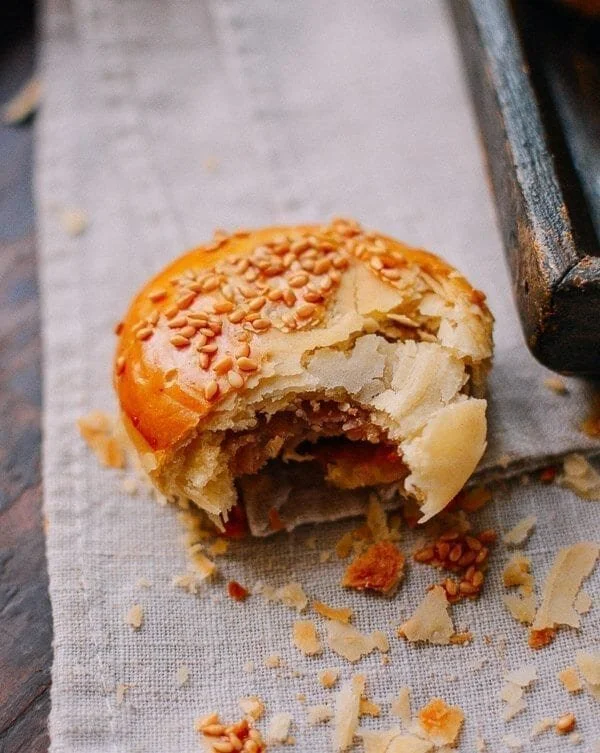
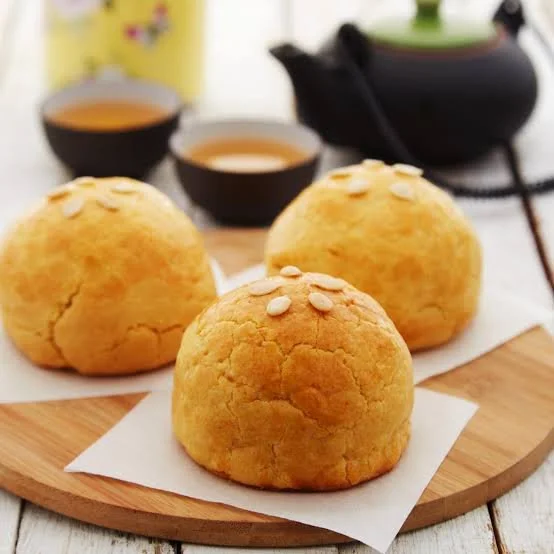
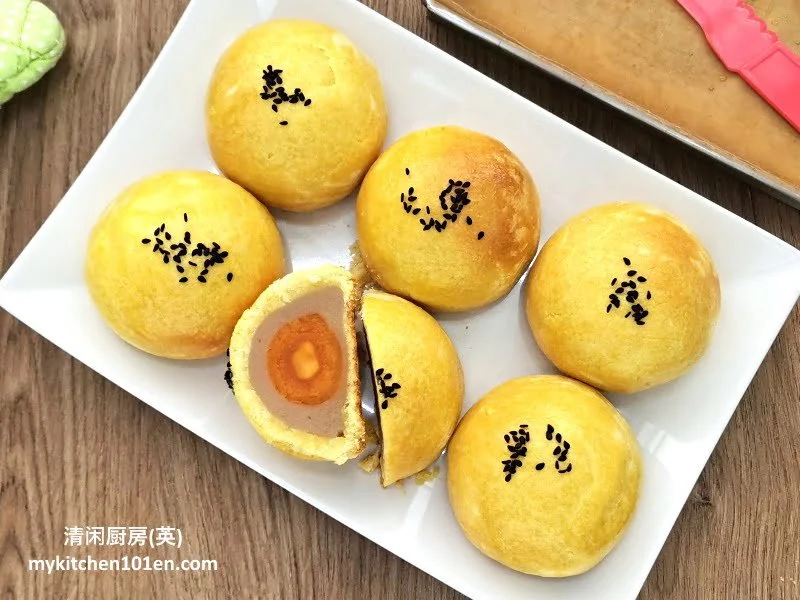
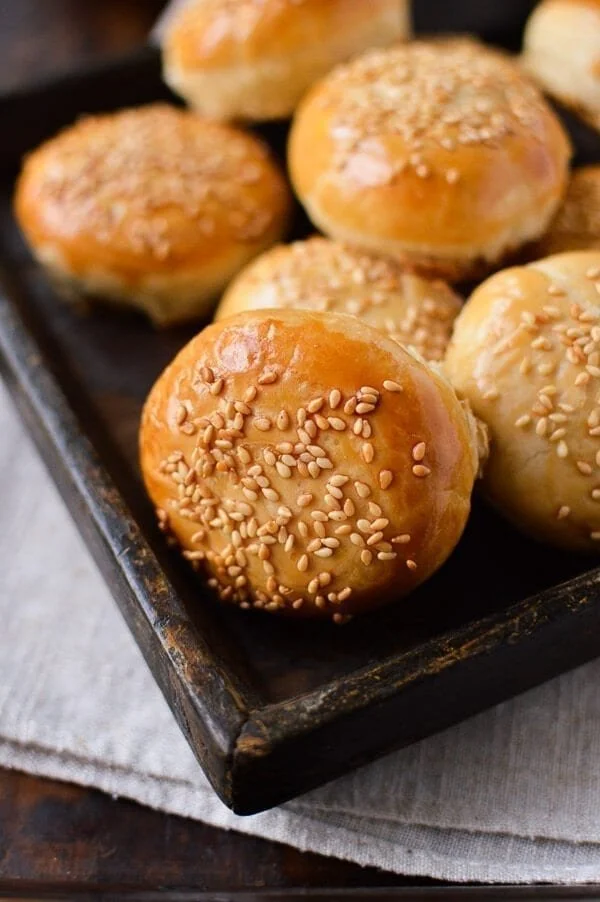
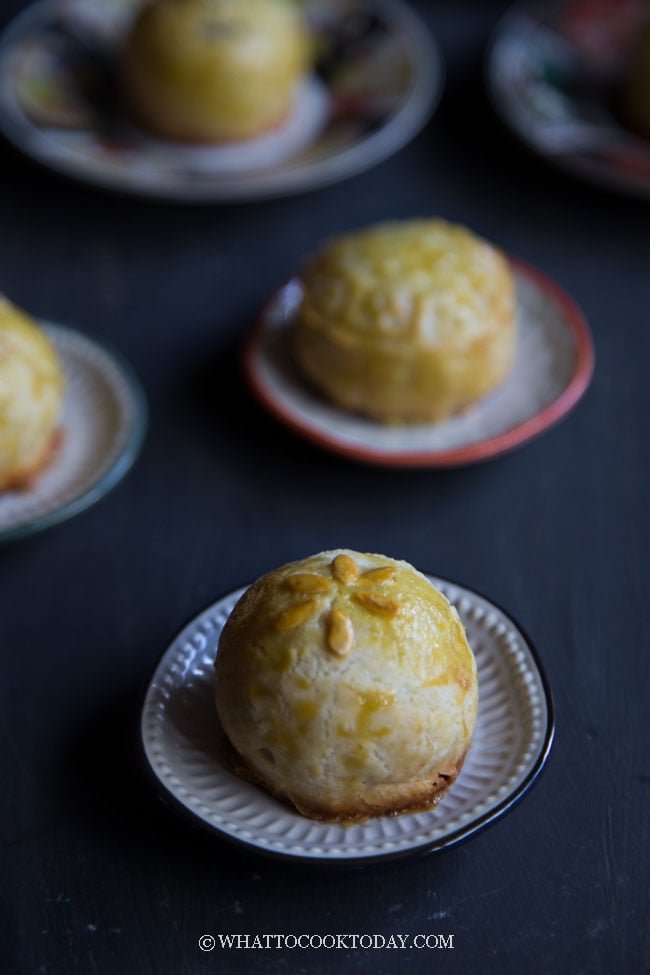
Images of the Shanghai mooncake by The Woks of Life, QL Kitchen, What To Cook Today, & My Kitchen 101
Taiwanese mooncakes
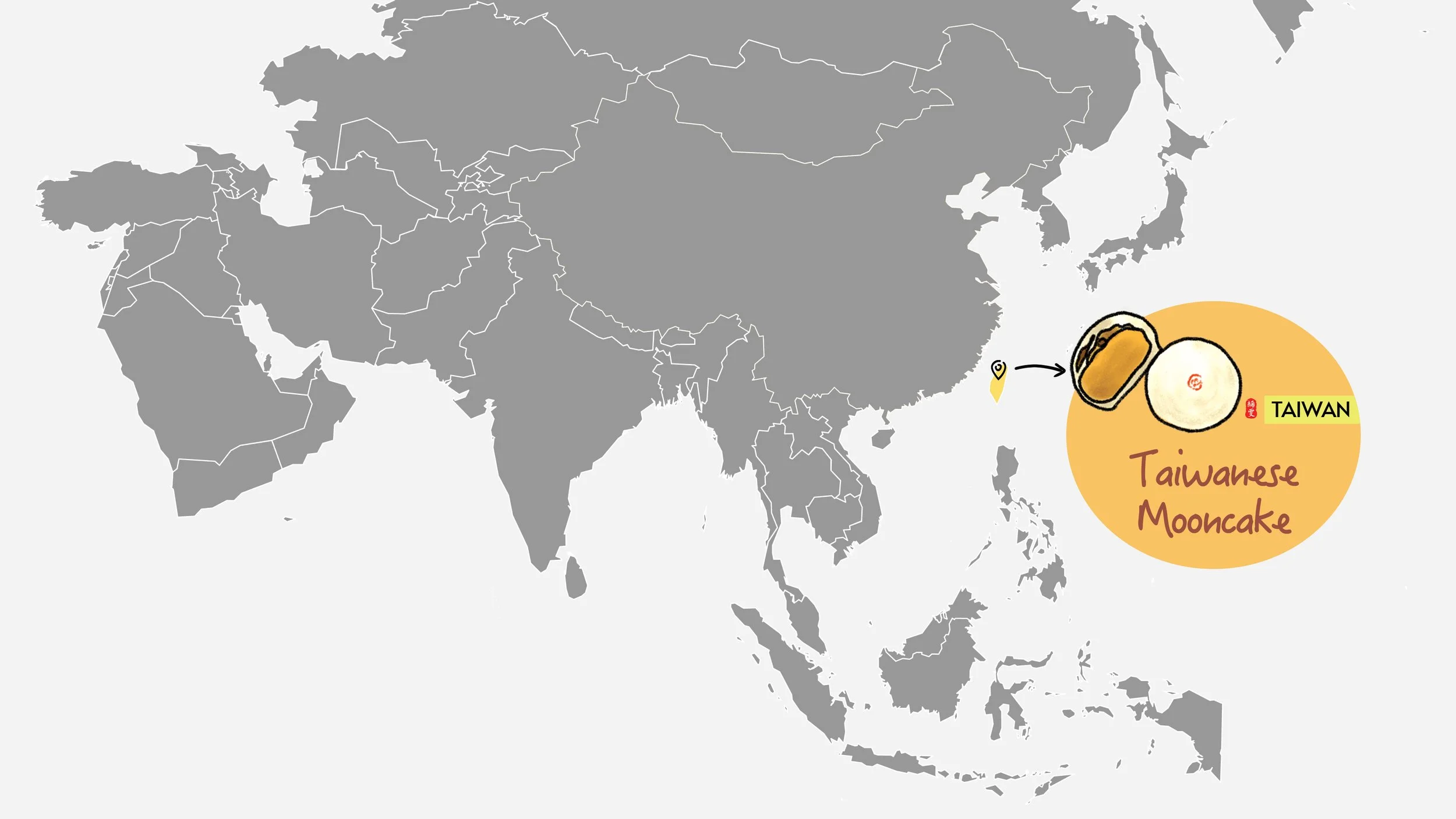
Visual Map of the Taiwanese mooncake by Zhi Wen Design
Taiwanese mooncakes reflect the island’s layered history, regional tastes, and inventive spirit. Rooted in mid-Autumn Festival traditions shared across Greater China, Taiwan’s mooncakes have evolved into distinct styles that combine local ingredients, influences from Fujian and Cantonese baking, Japanese colonial-era touches, and contemporary culinary creativity.
Taiwanese mooncake fillings range widely from classic to avant-garde, often blending textures and local flavors:
Lotus seed paste: A classic, smooth, subtly sweet base often paired with a salted egg yolk for contrast.
Red bean paste: Sweet, earthy, and sometimes combined with pineapple or citrus to cut sweetness.
Mung bean and green bean paste: Light, pastel-colored versions that can be less cloying and pair well with floral notes.
Taro and sweet potato: Indigenous tubers give a creamy, starchy texture and are commonly used in southern and indigenous adaptations.
Pineapple: Reflecting Taiwan’s famous fruit, pineapple fillings are tangy-sweet and sometimes combined with winter melon for a textured jam.
Nuts and seeds: Mixed nut fillings—walnut, almond, sesame—add crunch and savory depth; sun-dried fruits and melon seeds are also common.
Tea-infused: Taiwan’s oolongs (High Mountain, Dong Ding, Alishan) and black teas are used to scent or flavor pastes, offering fragrant, slightly astringent counterpoints to sweetness.
Overall impression Taiwanese mooncakes honor seasonal ritual and social exchange while celebrating local produce and culinary inventiveness. Whether a gilded traditional lotus paste with a salted yolk or a pastel snow-skin filled with oolong custard, each mooncake is a small story of place, melding regional tastes, historical layers, and Taiwanese designers’ love of beautiful, functional presentation.
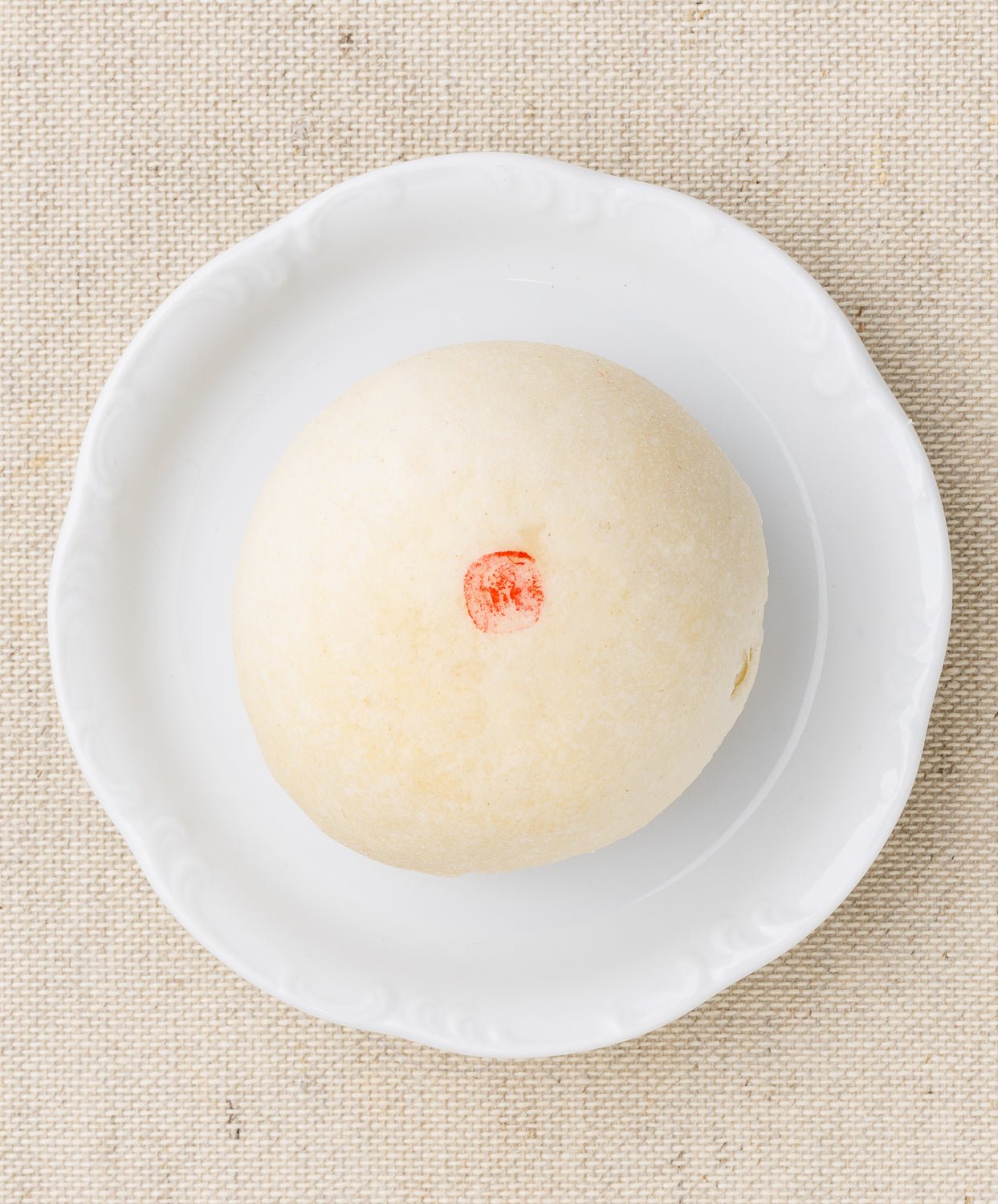
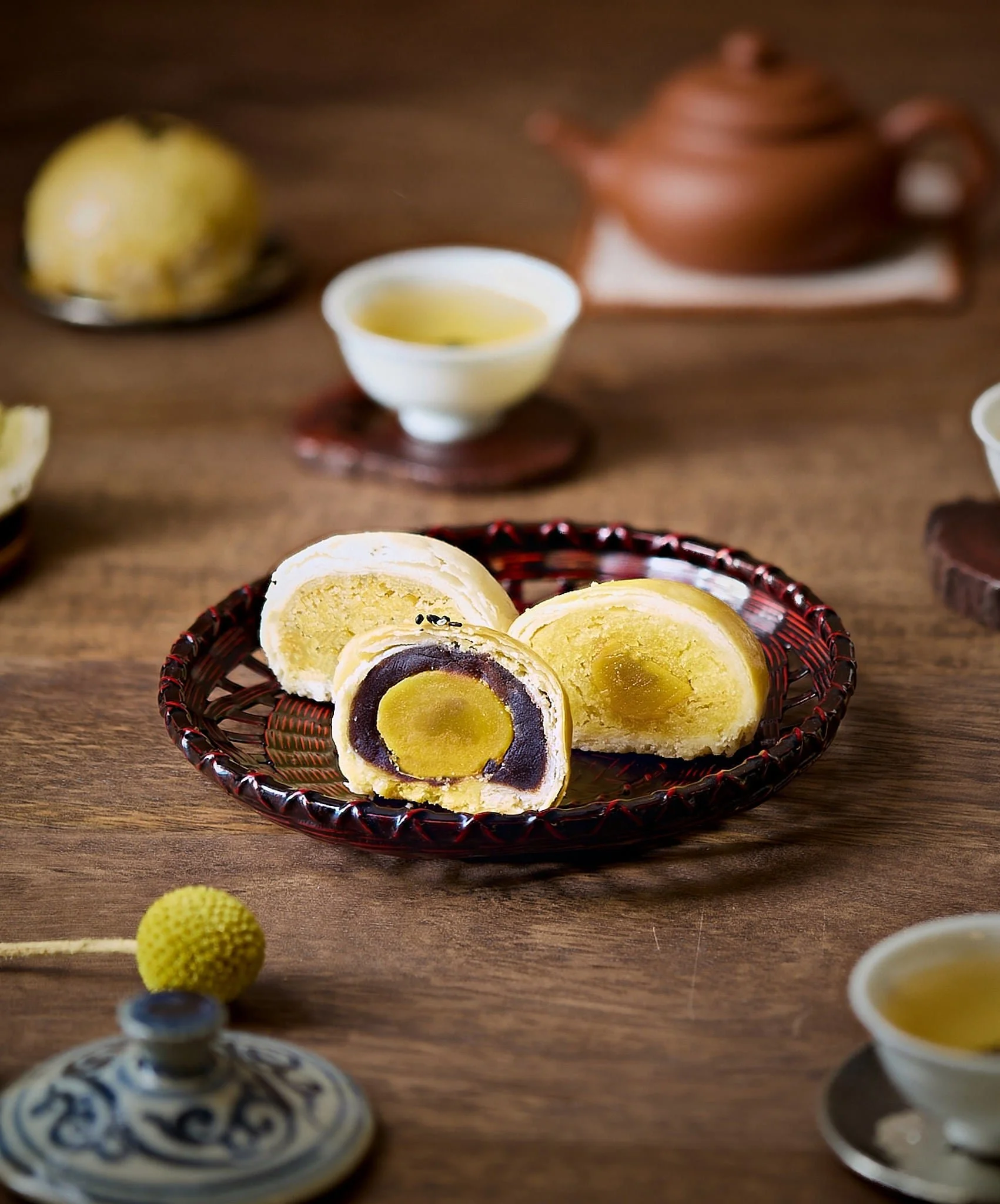
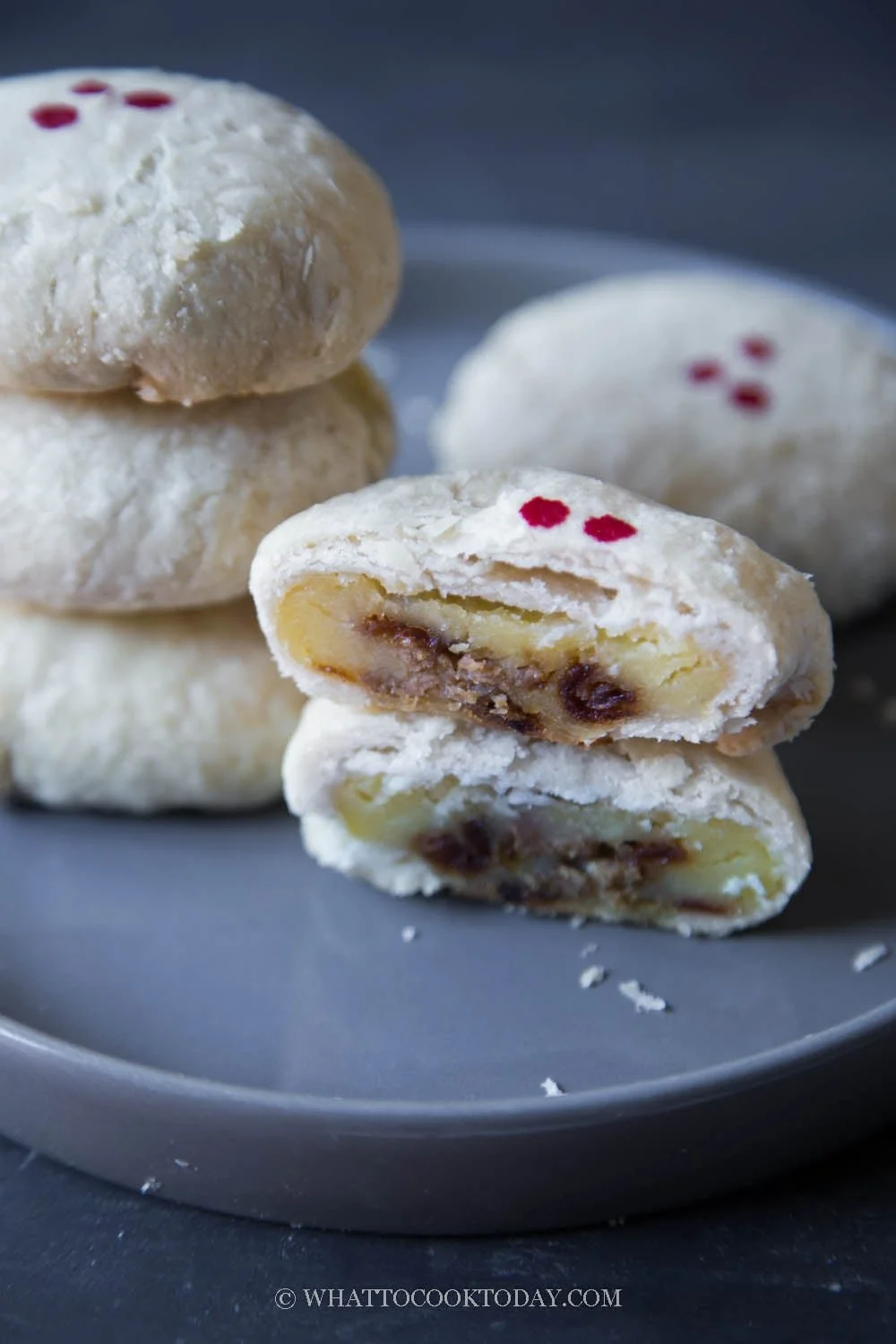
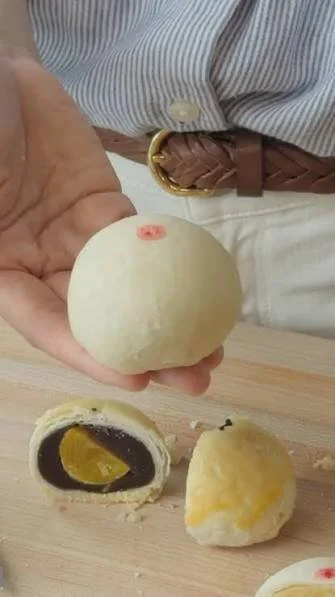
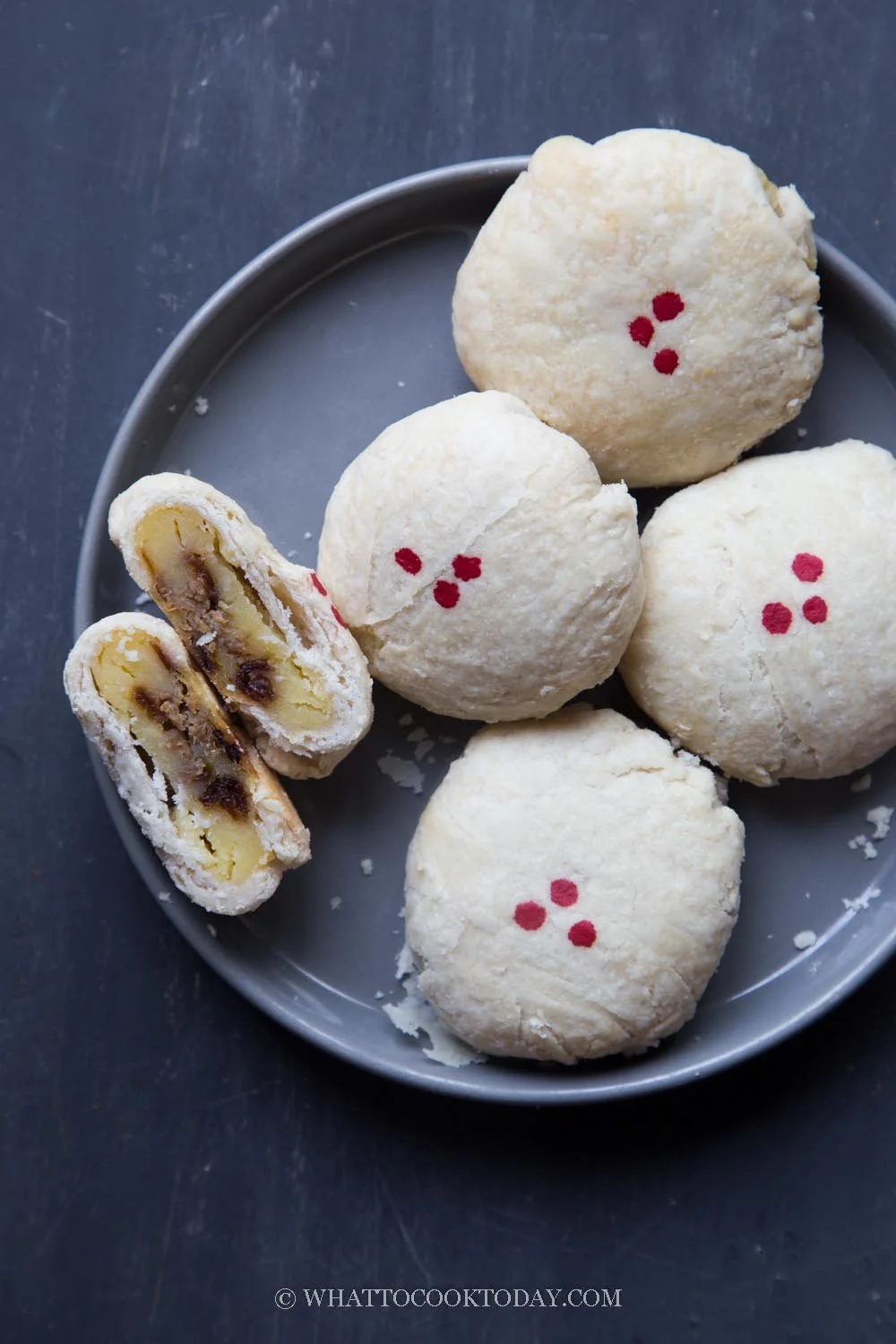
Images of the Taiwanese mooncake by Te Company & What To Cook Today
Vietnamese Bahn Trung Thu
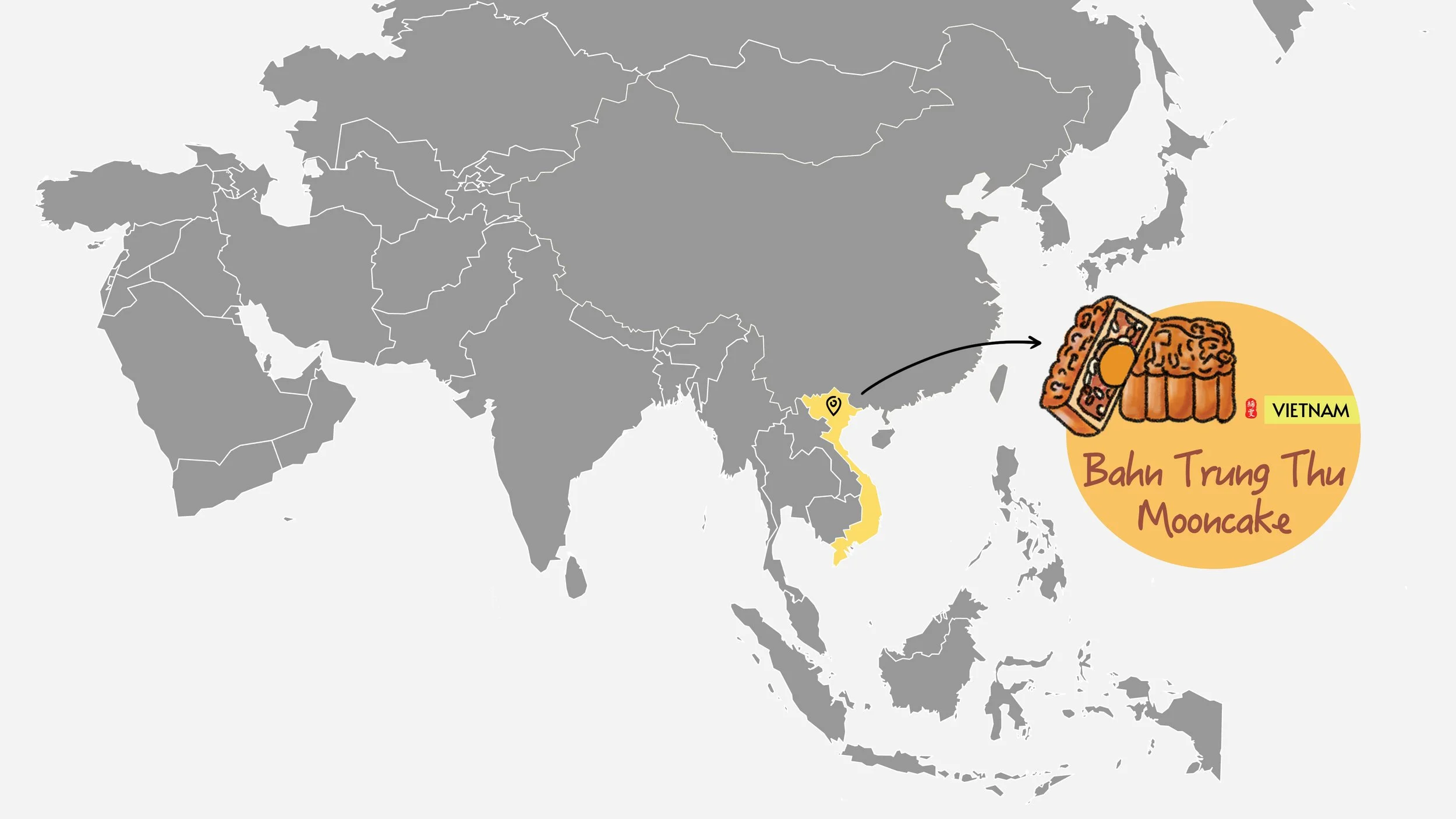
Visual Map of the Vietnamese Bahn Trung Thu mooncake by Zhi Wen Design
Bánh trung thu (Vietnamese mooncakes) are more than a sweet treat; they are a compact expression of regional tastes, centuries-old ritual, and refined craftsmanship. Tradition, symbolism, and local ingredients shape their form and flavor across Vietnam, producing a mooncake that is distinct in form but deeply related to other East and Southeast Asian mid‑autumn confections. Traditional mooncakes are made using carved wooden molds or metal ones that imprint decorative patterns—classical scenes, calligraphy, or auspicious animals. The crust is thin but resilient, polished to a glossy, amber sheen through careful baking and sometimes an egg wash. Classic fillings include:
Lotus seed paste (nhân sen): A classic, smooth, and fragrant paste often sweetened moderately and occasionally blended with lard or butter for silkiness. It can be studded with one or two salted egg yolks for richness and a visual center.
Mung bean (nhân đậu xanh): Earthy, slightly granular when traditional, or whipped to a refined silkiness in higher-end versions. Often lightly sweetened and paired with nuts or candied winter melon.
Mixed nuts and seeds (nhân thập cẩm): A hearty, textural filling combining chestnuts, melon seeds, lotus seeds, almonds, walnuts, sesame, dried fruits, and sometimes ham or candied pork—fragrant, savory-sweet, and celebratory.
Savory pork (nhân thịt): A distinctly Vietnamese twist: seasoned ground or diced pork, sometimes combined with Chinese five-spice, shallot, and candied winter melon—offering umami counterpoint to sweet pastry.
Coconut, durian, and tropical fruit: Favored in the south, these fillings are aromatic and lush—coconut milk–rich pastes or durian pulp prepared to temper its strong aroma while preserving its custardy texture.
Modern flavors: Matcha, chocolate, coffee, salted caramel, pandan, and fruit jellies have made their way into contemporary assortments, often in smaller portions or fusion-style mooncakes aimed at younger consumers.
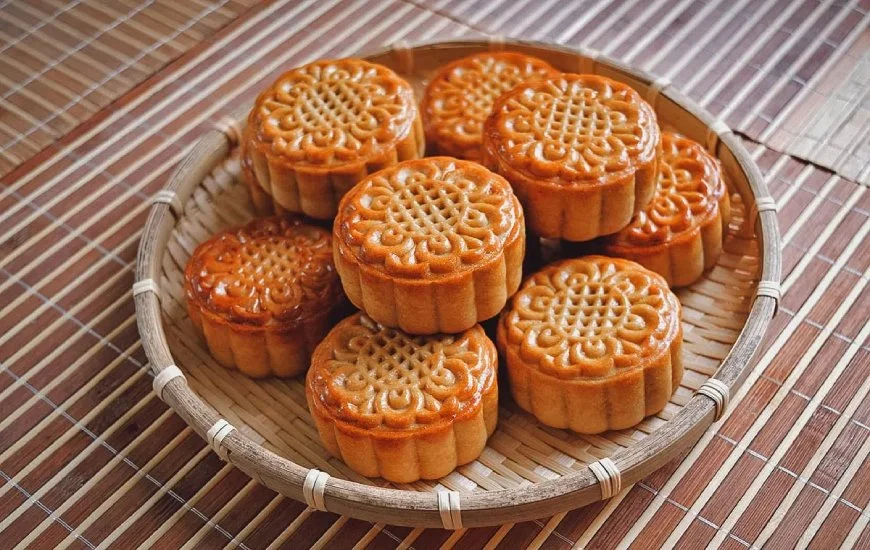
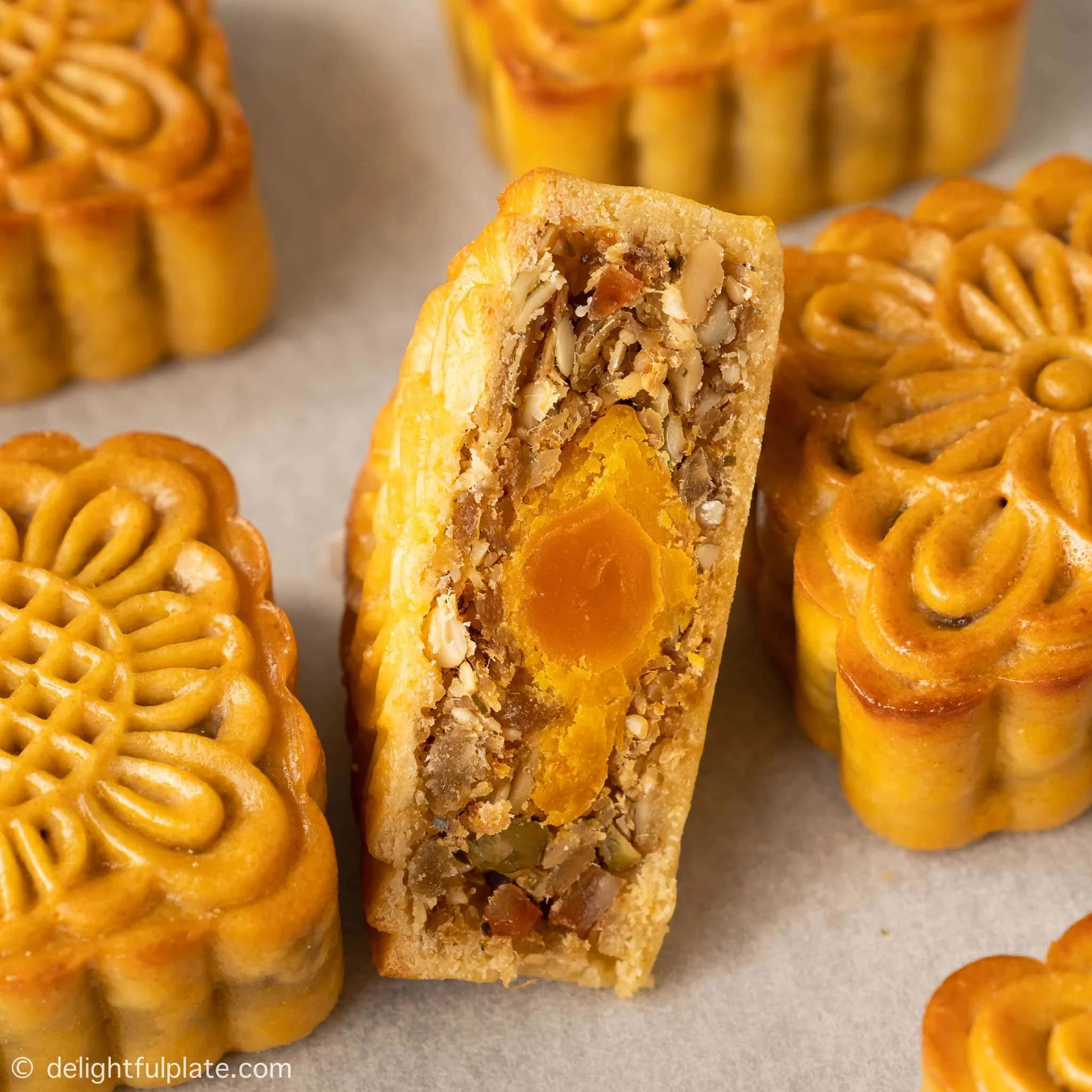
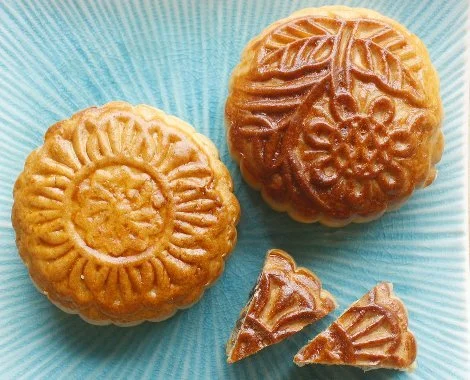
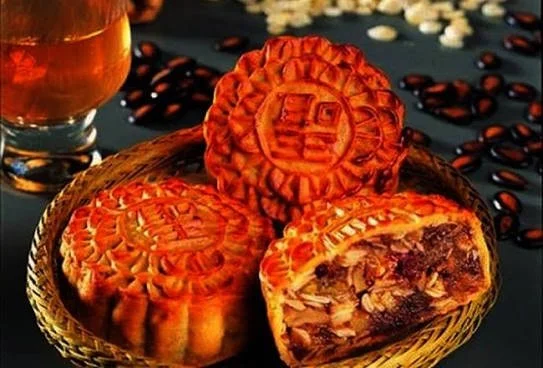
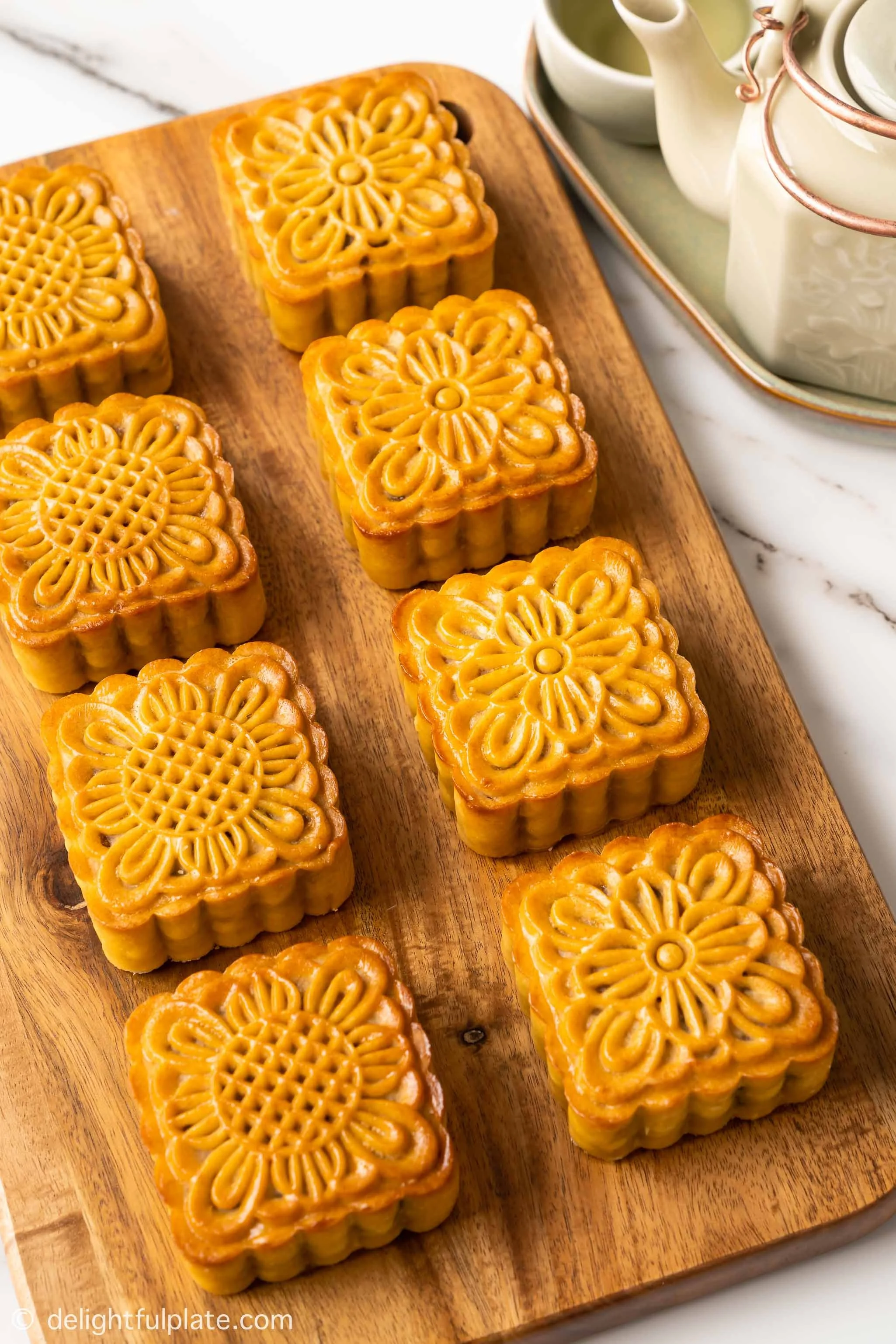
Images of the Vietnamese Bahn Trung Thu mooncake by Chapter Hanoi, Vietnam Travel Guide, Sonasia Holiday, & Delightful Plate
Filipino Hopia
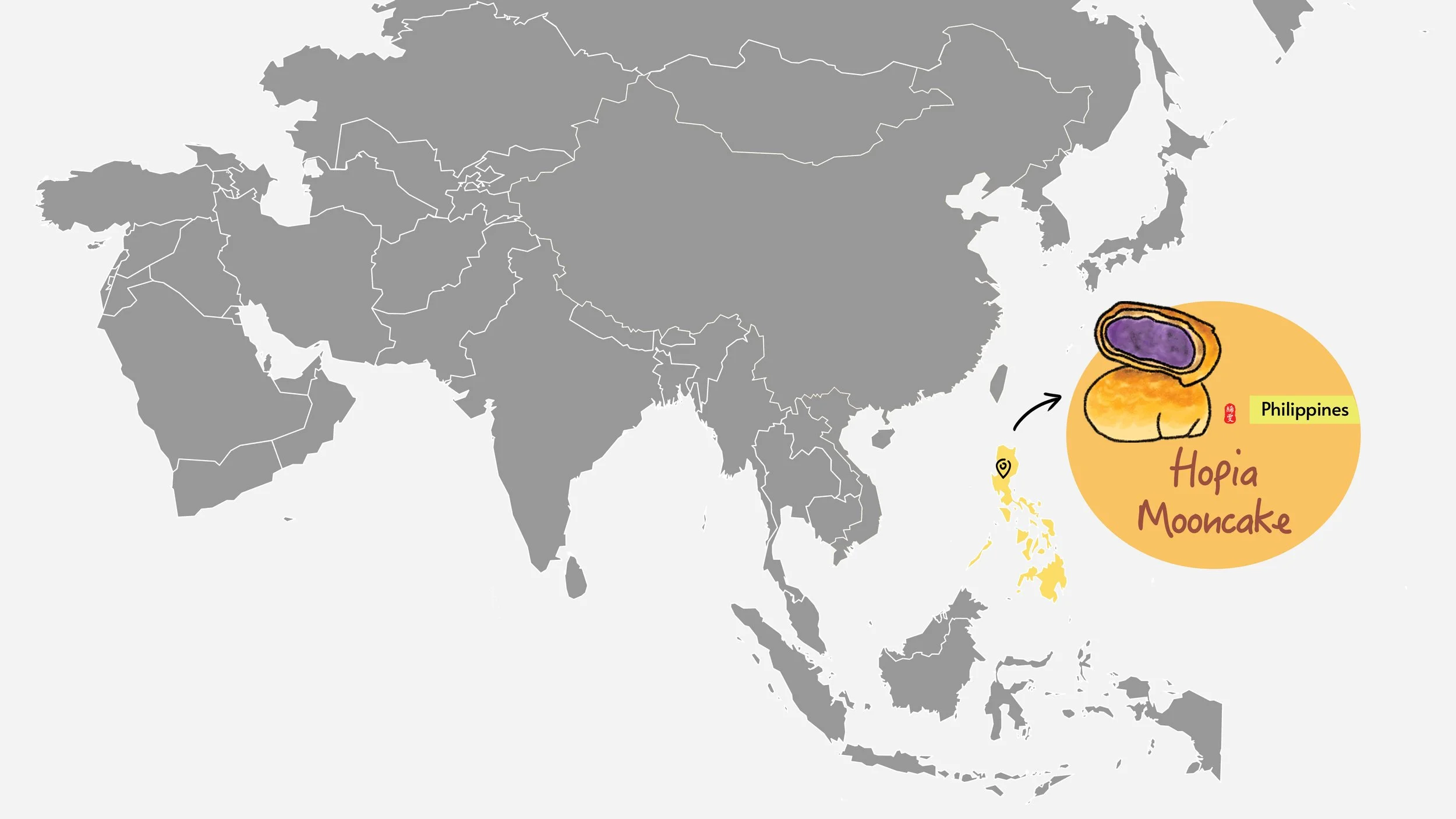
Visual Map of the Filipino Hopia mooncake by Zhi Wen Design
Filipino hopia mooncakes are a culinary bridge between Chinese pastry tradition and Filipino taste, shaped by centuries of trade, migration, and local creativity. Originating in towns and neighborhoods with strong Chinese-Filipino communities; most notably binondo in Manila, Cebu, and other port cities- hopia became an everyday celebration of shared culture rather than a single festival treat. Hopia is both an everyday snack and a festive item, served during Lunar New Year, family gatherings, and town fiestas. It’s also a popular pasalubong (souvenir) to bring from one’s hometown.
Typically round (similar to mini mooncakes) or slightly flattened discs, hopia are hand-sized for portability. The edges can be smooth or faintly patterned from molds; some bakers stamp the pastry with characters or symbols. There are two common main crusts- flaky (puff-pastry-like layers achieved through rolling and folding with fat) and cake-like (shortcrust with a tender crumb). The flaky style produces delicate, shimmering layers; the cake-like crust yields a denser, buttery exterior. Classic fillings include:
Hopia monggo (mung bean): The classic Filipino favorite—sweet, smooth paste of cooked mung beans (munggo), sometimes with a hint of pandan or vanilla. It’s dense, subtly nutty, and balanced in sweetness.
Ube (purple yam): A distinctly Filipino twist, ube hopia offers vibrant purple filling with floral, vanilla-like notes and a creamy texture that pairs well with both flaky and cake crusts.
The pastry’s mild sweetness and comforting, somewhat oily mouthfeel (from butter or lard in traditional recipes) are balanced by earthy beans or bright ube notes. When enjoyed warm or at room temperature, hopia’s simplicity and depth make it an approachable treat across ages. Artisanal and boutique bakers have reimagined hopia with premium ingredients, smaller-batch techniques, and novel flavor pairings, while preserving traditional styles. This revival positions hopia both as a nostalgic staple and as a design-forward, collectible pastry—rooted in region, history, and the evolving culture of Filipino food.
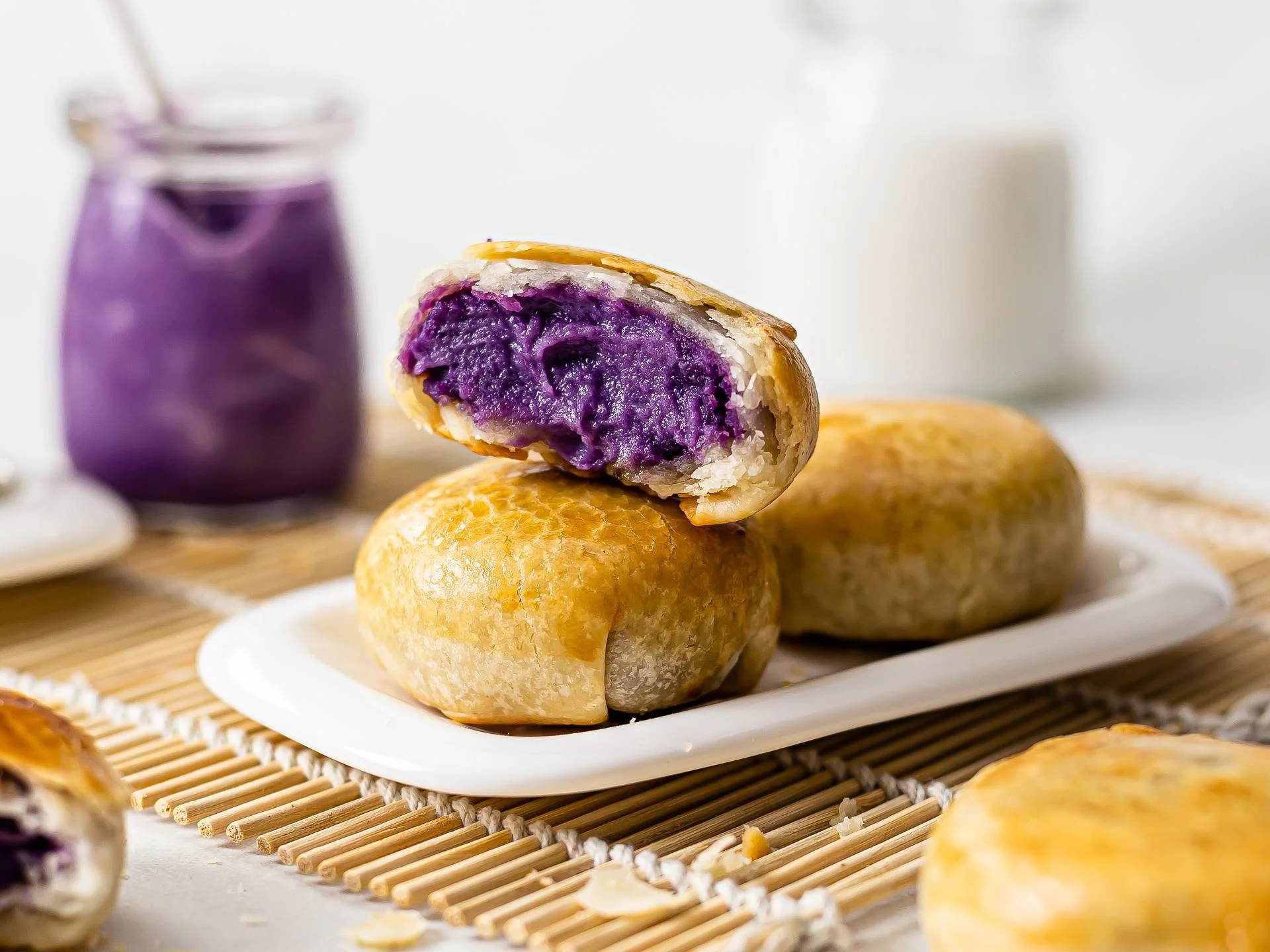
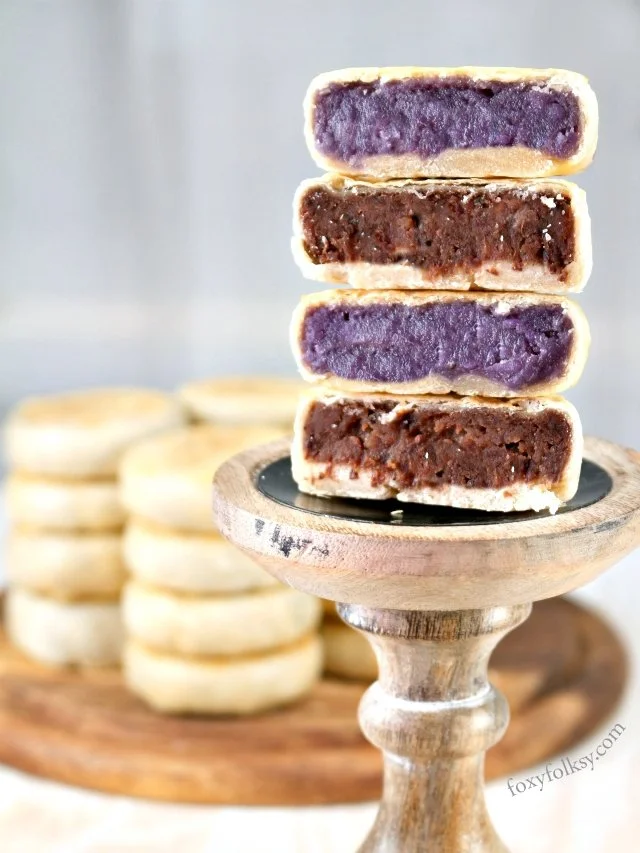
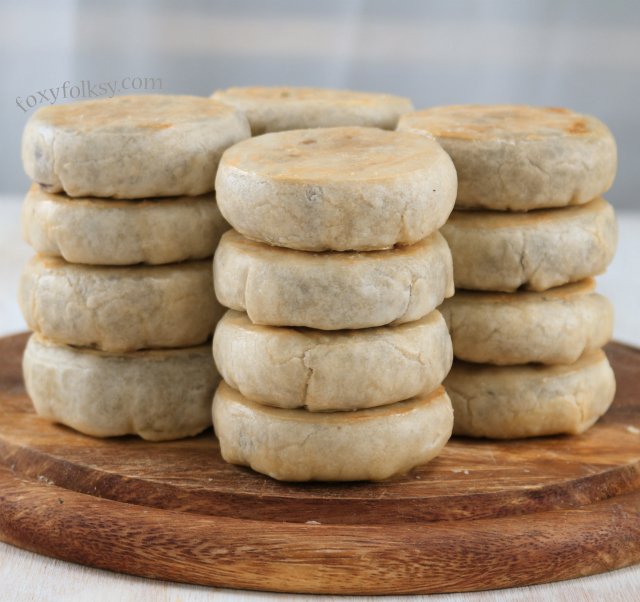
Images of the Filipino Hopia mooncake by Foodaciously & Foxy Folksy
Indonesian Bakpia
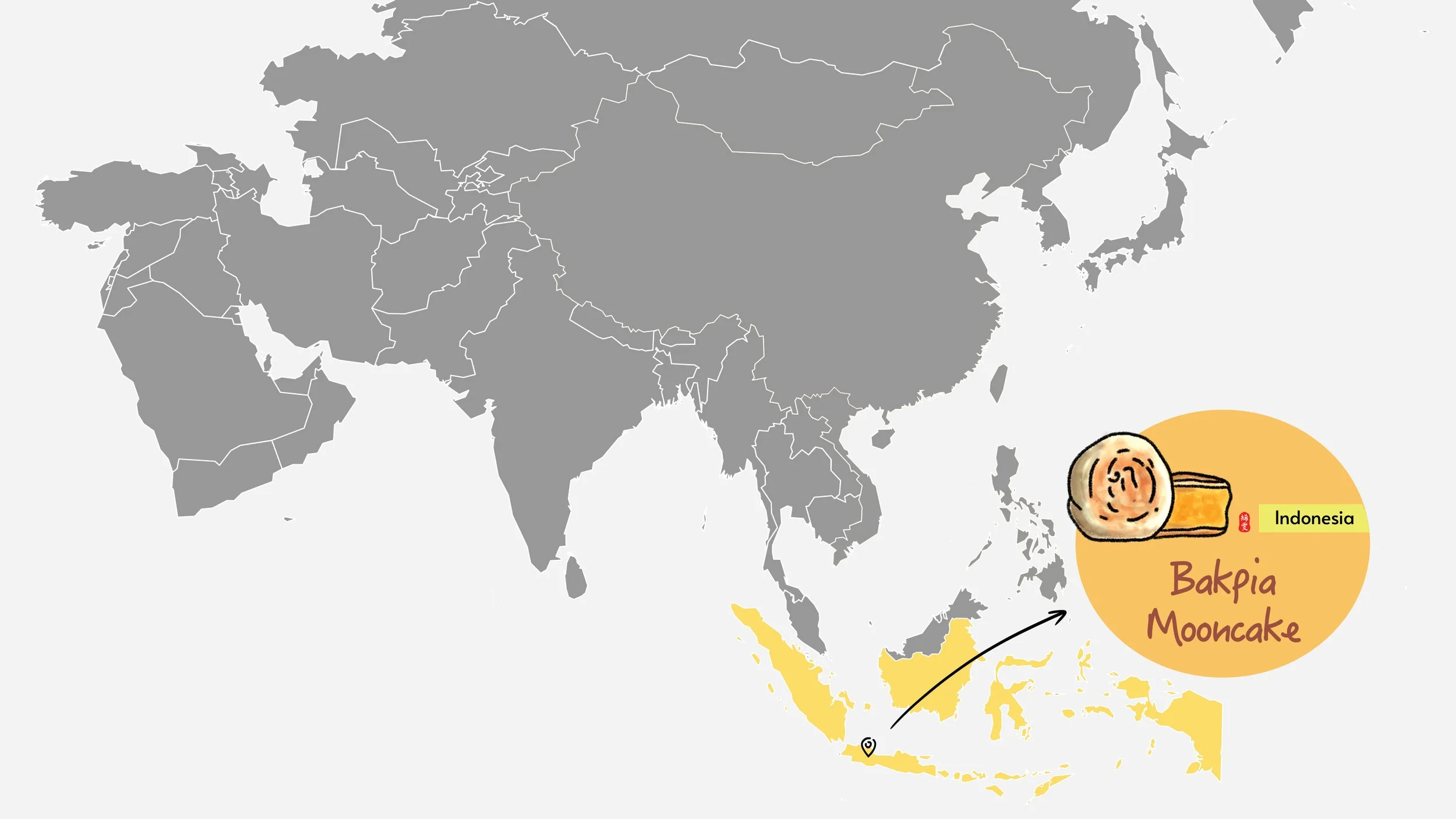
Visual Map of the Indonesian Bakpia mooncake by Zhi Wen Design
Bakpia mooncakes (bakpia or bakpia pathok) are a uniquely Indonesian pastry that blends Javanese, Chinese, and colonial influences into a small, hand-held mooncake with a soft, flaky exterior and a rich, often sweet filling. Originating in the city of Yogyakarta, especially the Pathok neighborhood where the most famous varieties come from, bakpia has become a cultural icon of Central Java and a popular souvenir for visitors. The pastry reflects the long-standing presence of Chinese migrants in Indonesia. “Bak” (meat) and “pia” (pastry) trace to Chinese confectionery; over time, local tastes adapted sweet fillings instead of savory meat. The result is a hybrid treat embedded in Javanese culinary life but bearing Chinese pastry techniques.
Smaller than Chinese mooncakes, usually about two to three inches in diameter, bakpia is round and slightly flattened, designed as a single-bite or two-bite snack. The exterior is thin, soft, and flaky, created by layering fat into the dough (similar to spiral pastry techniques). The crust browns lightly during baking and may show subtle spiral patterns or a smooth top. Traditionally plain and unadorned, many bakpia now carry stamped or pressed patterns, subtle glaze, or individual wrappers. They’re often sold in neat rows inside simple boxes, emphasizing freshness and hand-made quality.
Classic fillings and flavor includes:
Mung bean (kacang hijau): The classic and most traditional filling—smooth, pale green or yellow paste made from cooked, sweetened mung beans. It’s mildly sweet, earthy, and creamy in texture.
Red bean and sweetened bean pastes: Variants include azuki or other beans, adapted from broader East Asian pastry traditions.
Coconut and palm sugar: Local coconut-sugar blends give a deeper caramelized sweetness and a distinctly Indonesian aroma.
Durian: For regional enthusiasts, durian-filled bakpia offers an intense, fruity, and pungent profile prized by Southeast Asian palates.
Modern flavors: Chocolate, cheese, pandan, matcha, taro, and fruit jams reflect contemporary tastes and tourist demand. Fillings range from smooth pastes to chunkier nut or fruit textures.
Savory experiments: Some modern bakpia experiment with savory-savory-sweet combinations, but the defining character remains a sweet, concentrated center.
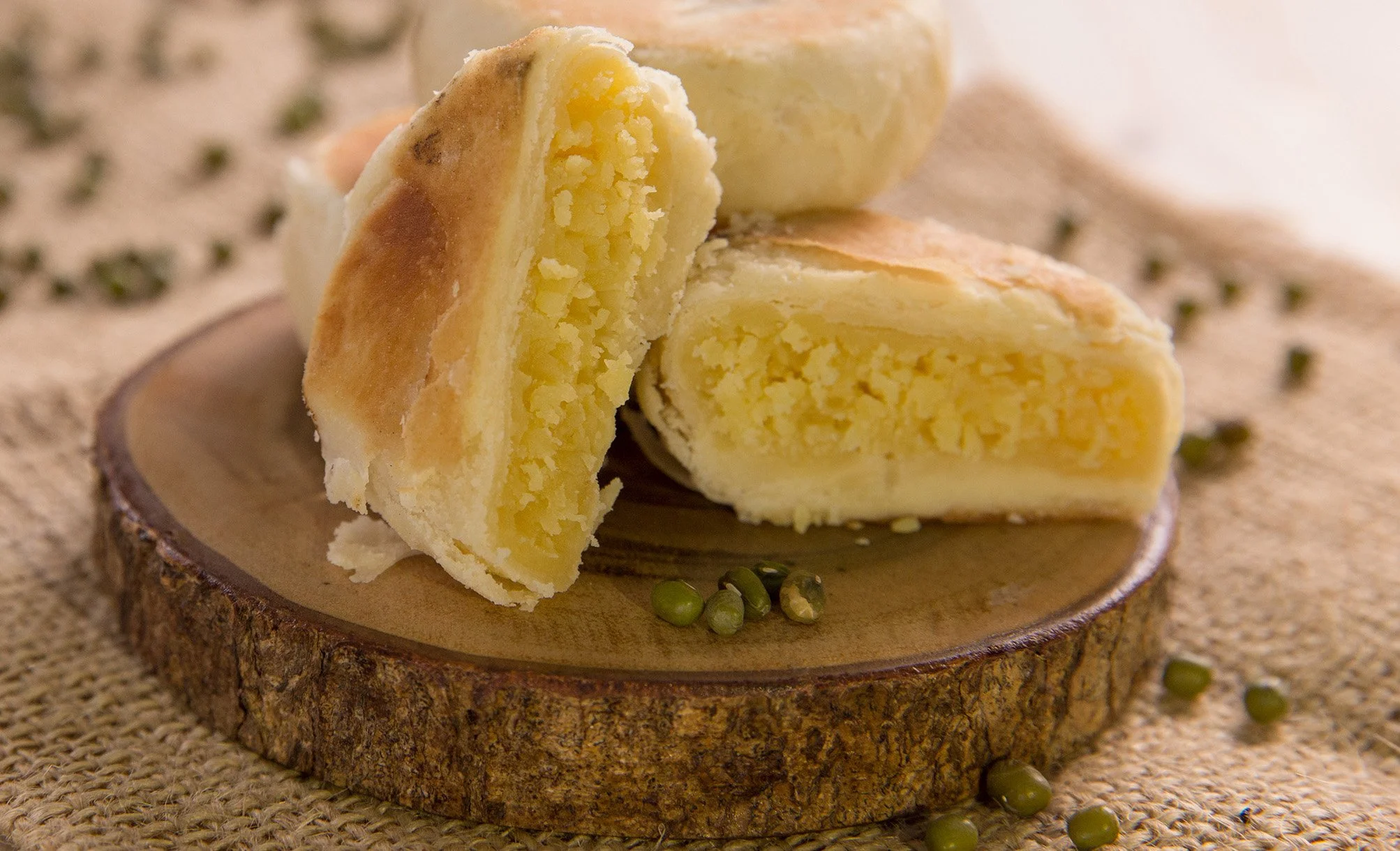
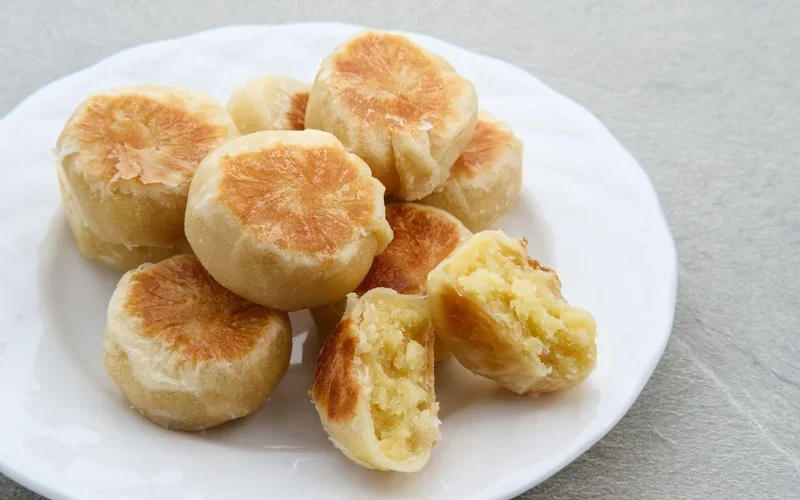
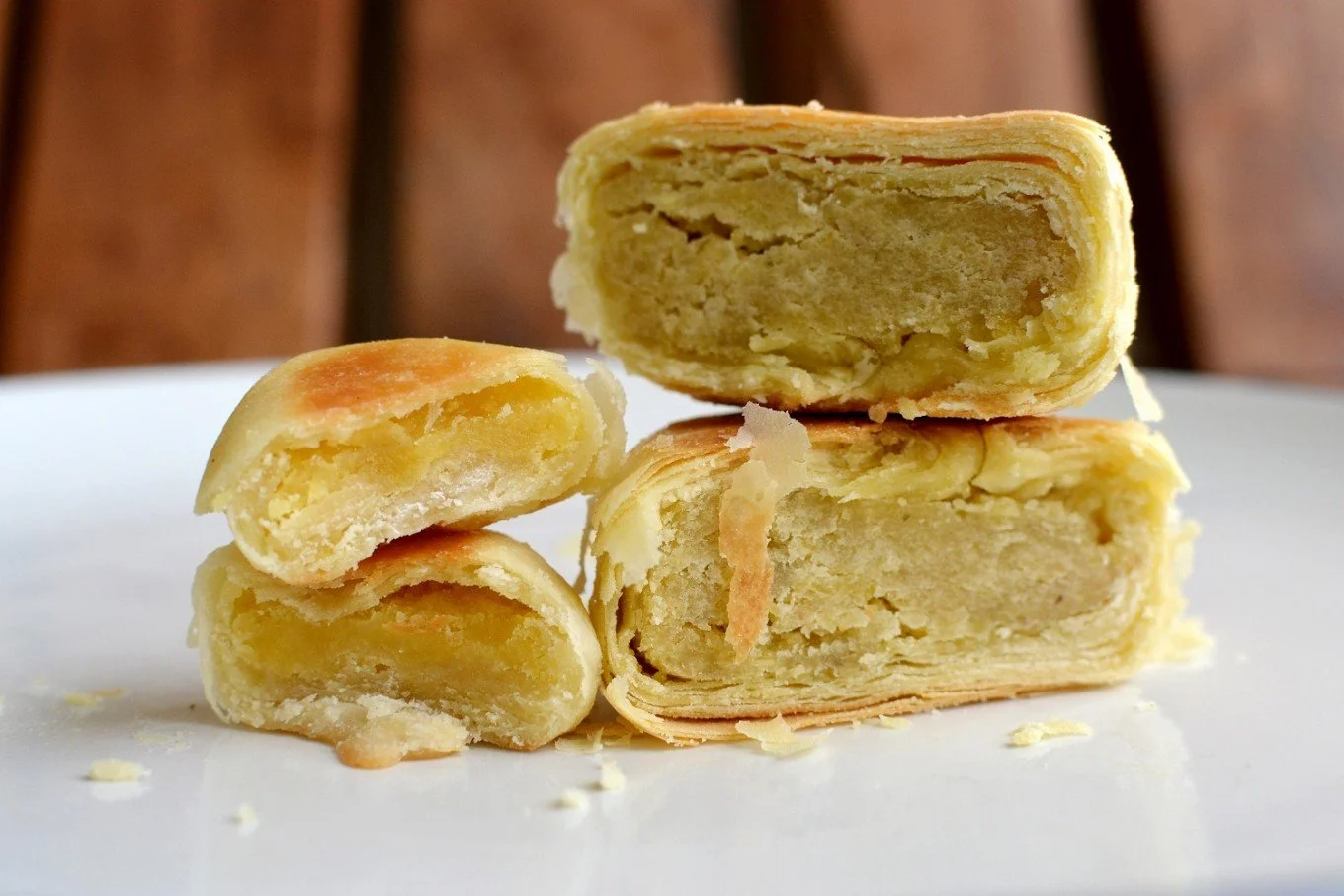
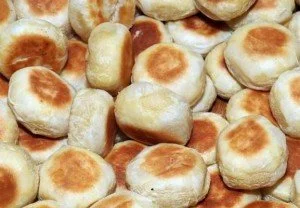
Images of the Indonesian Bakpia mooncake by Taste Atlas, Viator, The Jakarta Post, & Foodiepelago
Japanese Geppei
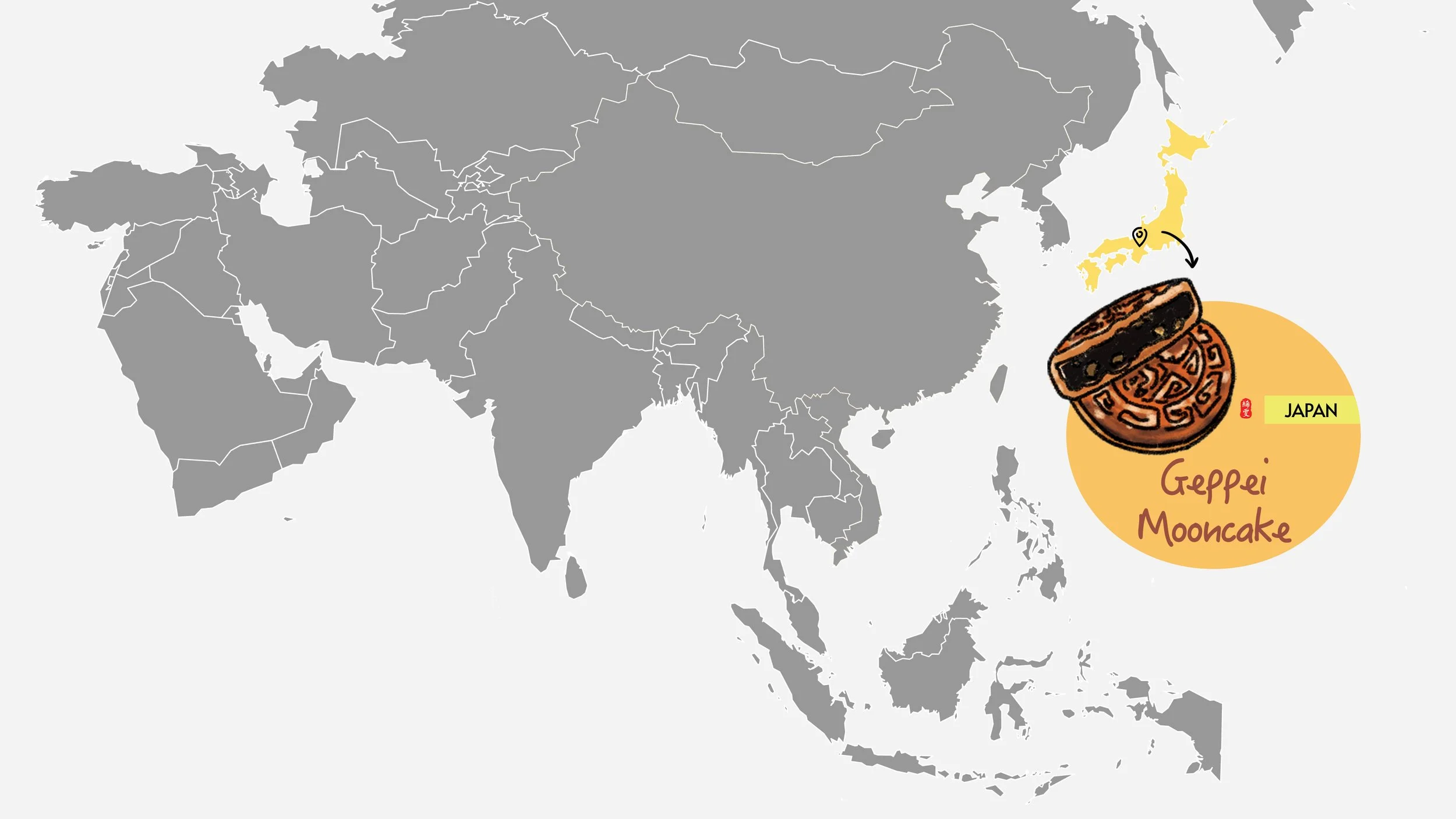
Visual Map of the Japanese Geppei mooncake by Zhi Wen Design
Geppei mooncakes (月餅 or “geppei” in some transliterations) are a distinctive Japanese interpretation of the traditional East Asian mooncake, shaped and flavored to reflect Japan’s regional tastes, seasonal rituals, and refined aesthetic sensibilities. While mooncakes are most commonly associated with Chinese Mid-Autumn Festival traditions, Japan developed its own versions through cultural exchange and local adaptation. Geppei mooncakes are found primarily in regions with strong confectionery traditions such as Kyoto, Osaka, and Kanazawa, where wagashi (traditional Japanese sweets) craftsmanship is prized. Geppei are often made and enjoyed during tsukimi (moon-viewing) festivities in autumn. They accompany offerings of rice dumplings (dango), seasonal produce, and tea, serving both as an edible tribute to the harvest moon and a refined pleasure for guests.
Geppei typically take a smaller, flatter round form compared to some mainland mooncakes. The surface may be gently domed or slightly concave, often bearing simple, elegant impressions rather than the heavy, ornate stamps seen elsewhere. The outer layer can be thin and tender, sometimes baked to a pale sheen or left unbrowned. Some variants use molded glutinous rice dough for a mochi-like chew, while others use a light pastry shell that yields to a smooth interior.
Classic fillings and flavors includes:
Wagashi influence: Fillings prioritize refined sweetness and textural balance. Anko (sweet red bean paste) remains a classic, often made from smooth koshian for a silky mouthfeel. White bean paste (shiro-an) is common for lighter color and delicate flavor.
Japanese ingredients: Local flavors abound—matcha (green tea) blended into paste for gentle bitterness; yuzu or other citrus zests for bright floral acidity; roasted chestnut (kuri) paste celebrating autumnal harvest; sweet potato (satsumaimo) for creamy, earthy sweetness; and black sesame for toasty depth.
Variations: Some geppei include whole ingredients—candied chestnut pieces, salted egg yolk is rare but sometimes used for richness—or are layered with jelly-like kanten or kuromitsu syrup to add moisture and a glossy interior. Mochi-wrapped or mochi-topped versions combine chew with paste for contrast.
Overall impression Geppei mooncakes embody a Japanese sensibility: restrained, seasonal, and artistically subtle. They transform the mooncake’s symbolic ritual into an expression of refinement—lightly sweet, texturally considerate, and aesthetically poised—making them both a meaningful festival offering and a delicate everyday indulgence.
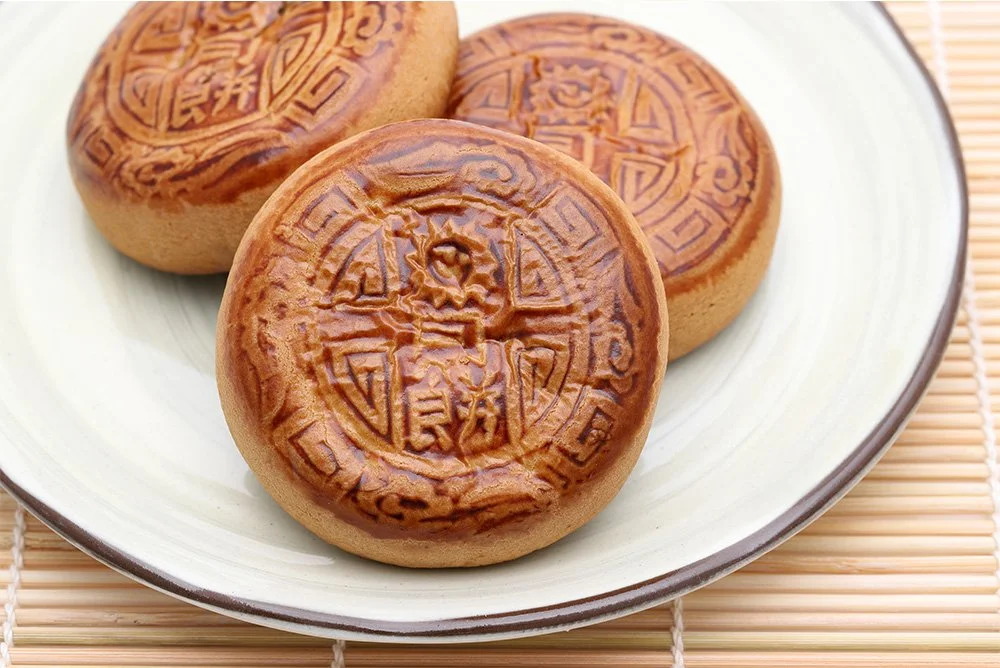
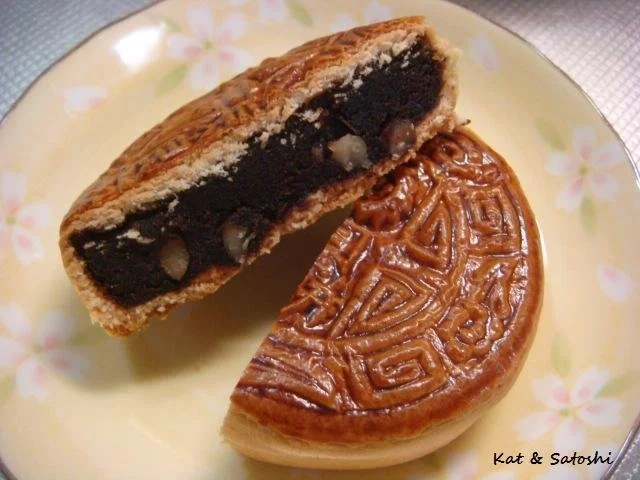
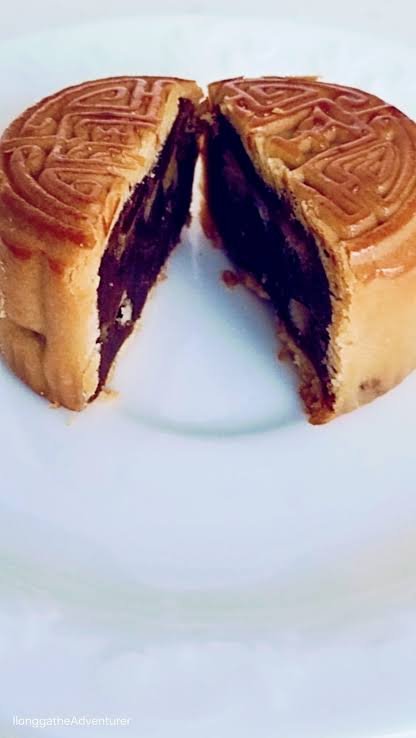
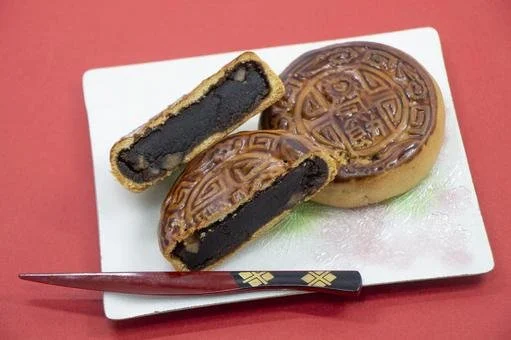
Images of the Japanese Geppei mooncake by Asian Inspirations, The Master Cook & Kat and Satoshi in Japan